
A sales team can have a strong product, a clear target market, and experienced managers — and still struggle to perform consistently.
One rep may need help asking better discovery questions. Another may know the product well but lose confidence when pricing comes up. A new hire may need more structure, while an experienced account executive may need to improve negotiation or multi-stakeholder selling.
Effective sales training starts by identifying the specific skills, knowledge, and behaviours that are holding each person back.
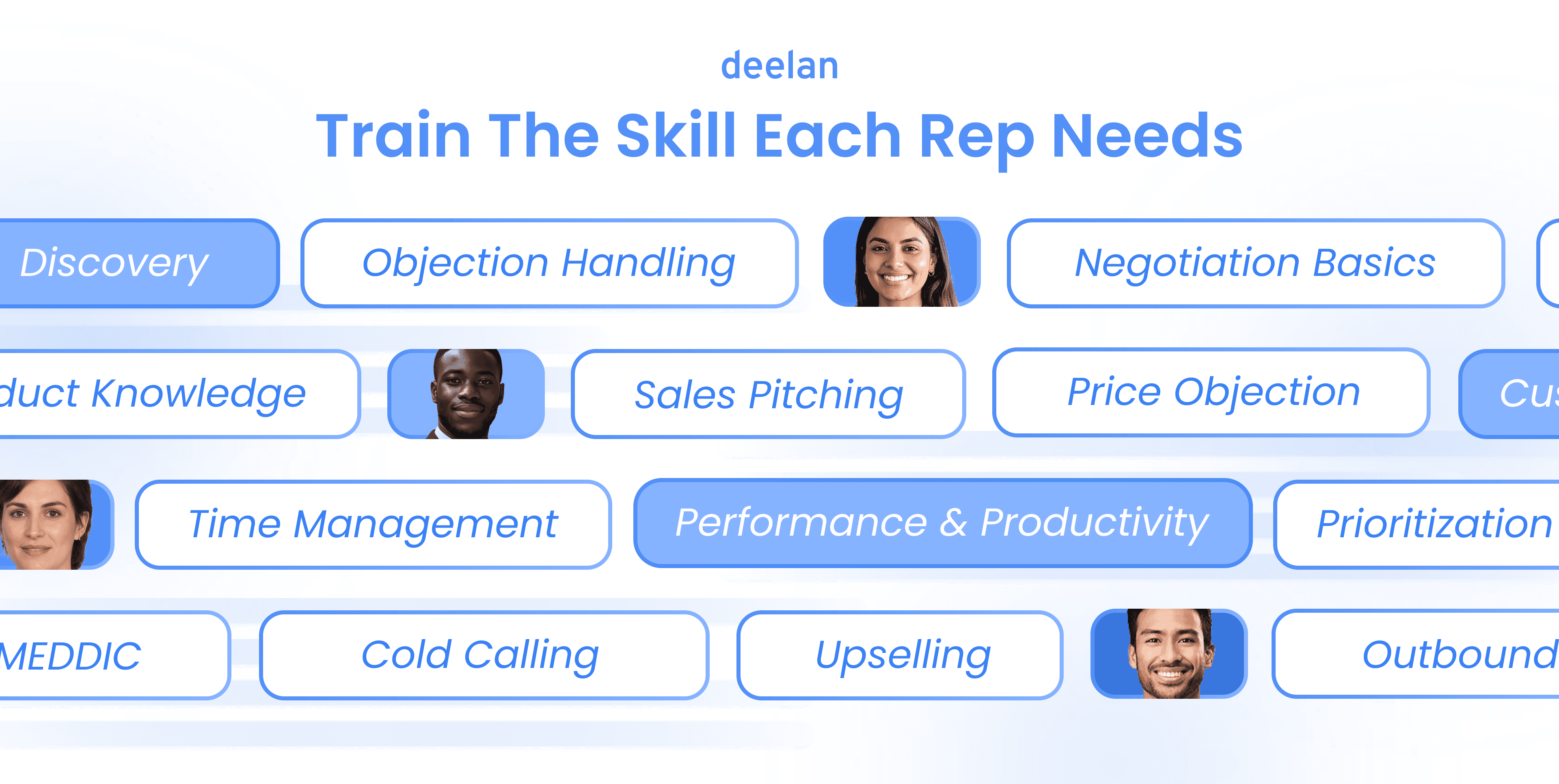
This guide covers 12 essential training needs for sales teams, the signs that each one needs attention, and practical ways to address them through courses, roleplays, microlearning, coaching, and structured training programmes.
12 essential training needs for sales teams
Training need | Common sign of a gap | Best training methods | Example activity |
|---|---|---|---|
Reps give vague or inaccurate answers | Courses, quizzes, product workshops | Explain the product to three buyer personas | |
Buyer and market knowledge | Messaging feels generic | Persona training, case studies, microlearning | Match buyer problems to relevant value propositions |
Prospecting | Low response or meeting-booking rates | Message workshops, call roleplays | Practise cold call openings and email personalisation |
Reps pitch too early | Call reviews, roleplays, coaching | Uncover the cause and impact of a vague pain point | |
Communication | Explanations are unclear or too long | Recorded practice, workshops, feedback | Explain the offer in under 60 seconds |
Reps miss important buyer signals | Call analysis, scorecards, roleplays | Ask follow-up questions without pitching | |
Reps become defensive or discount quickly | Objection drills, simulations, microlearning | Respond to pricing and competitor objections | |
Demos become feature tours | Demo simulations, screen-share practice | Run a personalised demo for an AI buyer | |
Reps give concessions too easily | Workshops, roleplays, deal reviews | Respond to a discount request without reducing price immediately | |
Closing and next steps | Calls end without clear commitments | Coaching, call reviews, roleplays | Secure a specific next step after a meeting |
Pipeline management | Opportunities stall or forecasts are unreliable | Pipeline workshops, manager coaching | Prioritise a pipeline and identify deal risks |
Sales methodology | Reps use processes inconsistently | Courses, assessments, scenario practice | Apply MEDDIC, SPIN, or another framework to a live deal |
1. Product knowledge
Sales reps need to understand what the product does, who it is for, which problems it solves, and where its limitations are.
Reps need to practise explaining the product differently depending on the buyer’s role, priorities, and level of technical knowledge.
Use short courses to introduce the product, quizzes to confirm understanding, and roleplays to test whether reps can apply that knowledge in a realistic conversation.
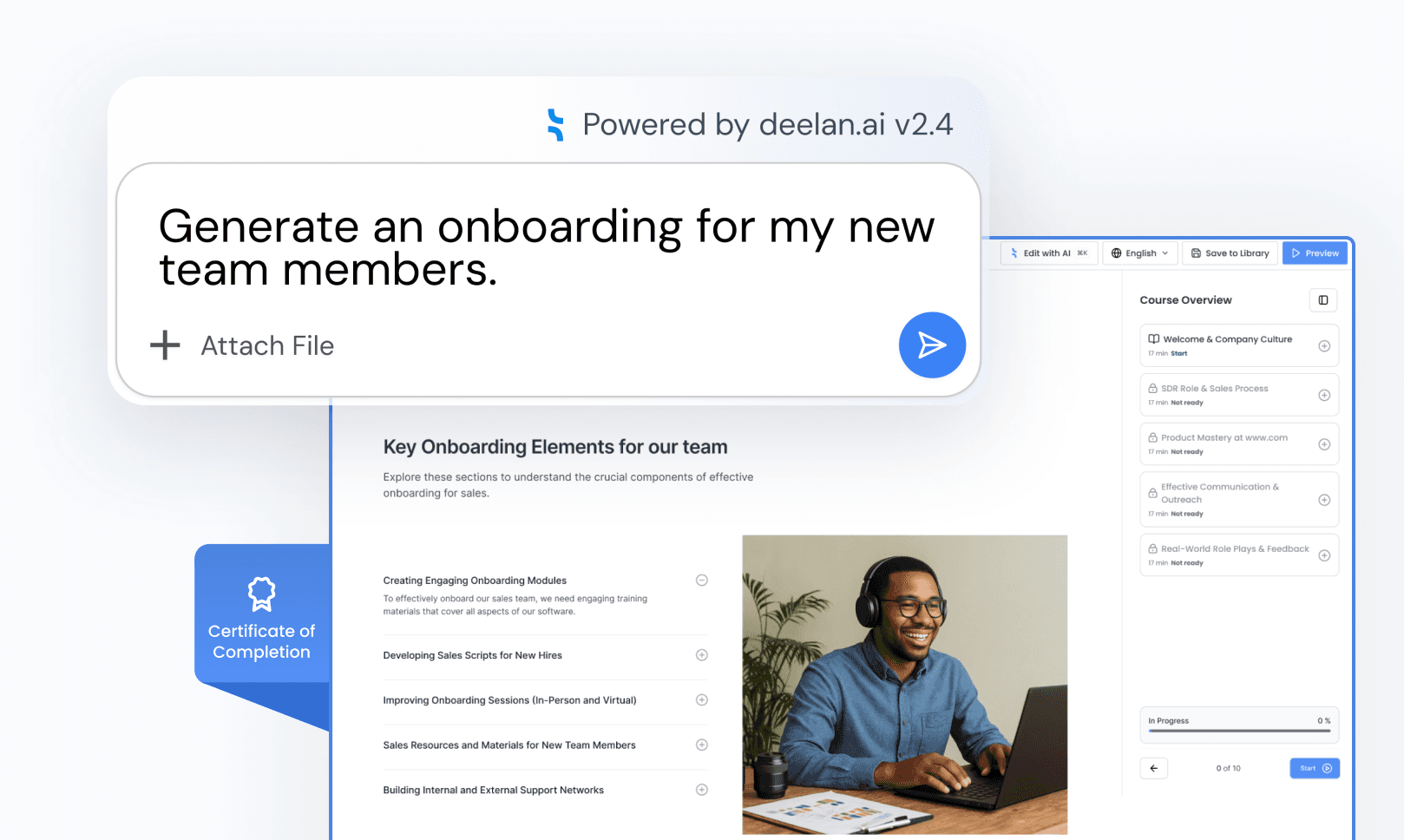
Example exercise: Ask a rep to explain the same product to a sales leader, a finance director, and an end user. The core product remains the same, but the value proposition should change.
Want to create product training faster?
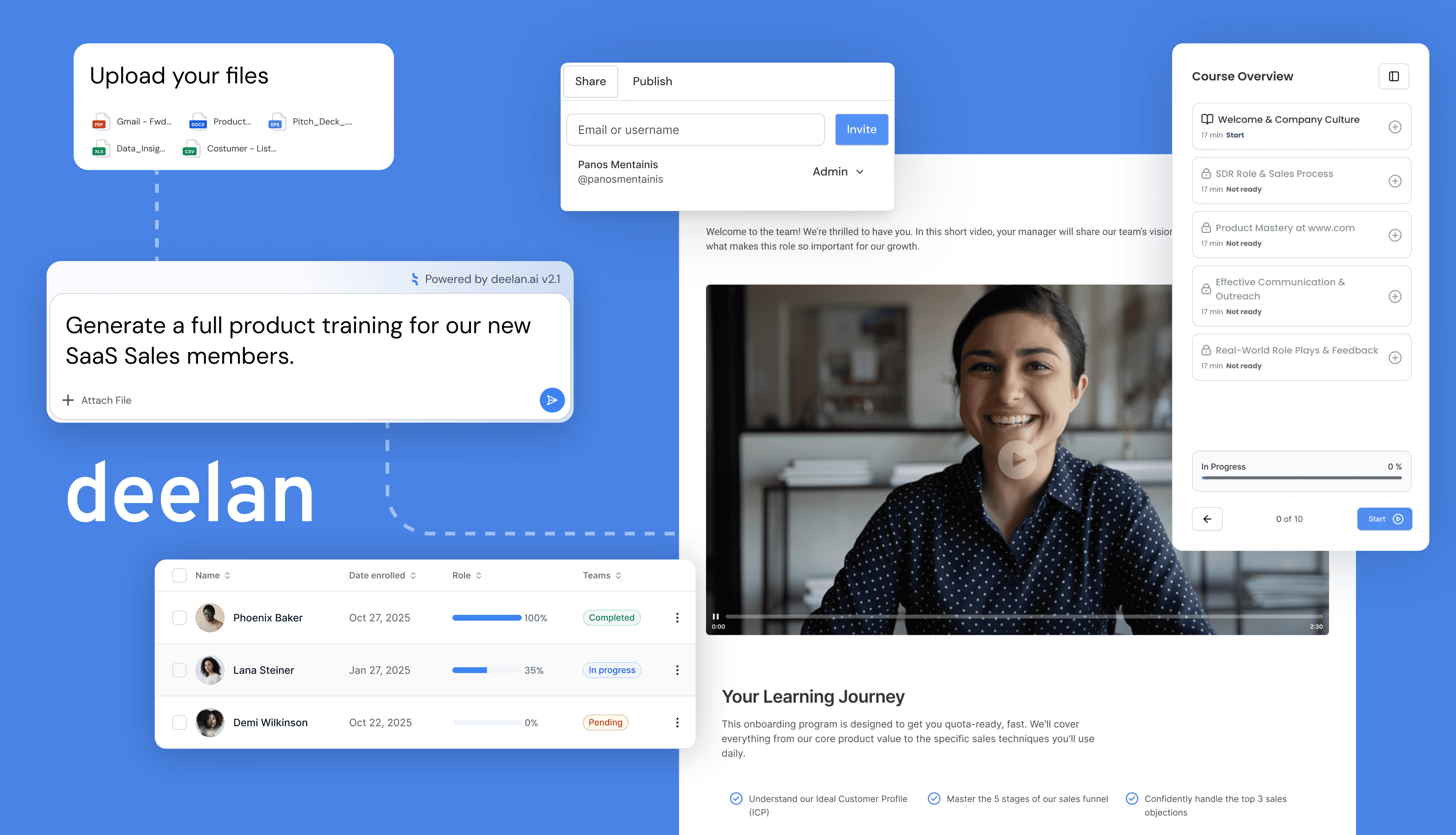
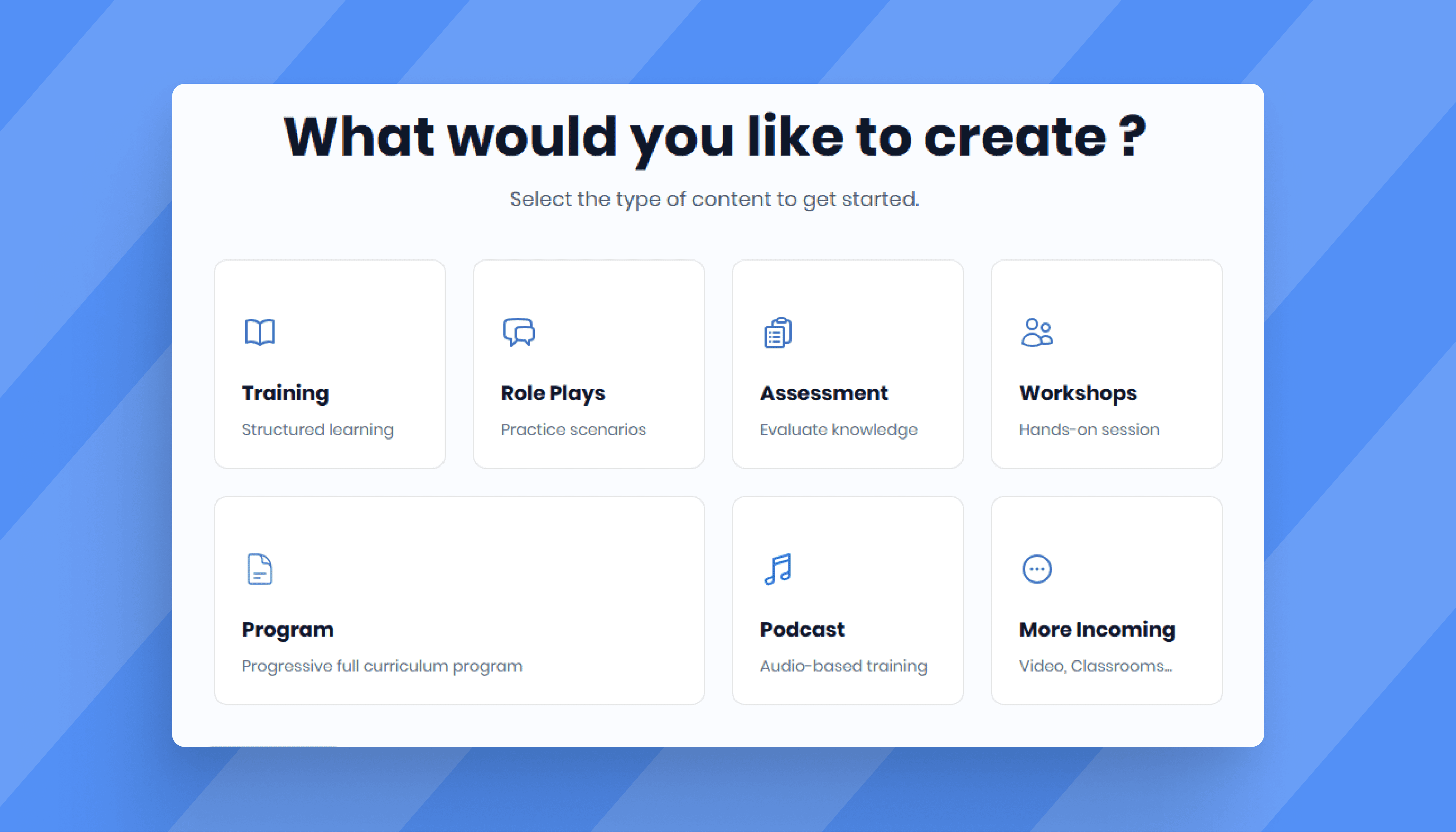
Use Deelan to turn product documents, presentations, playbooks, and internal resources into courses, assessments, microlearning, and practical training activities.
2. Buyer and market knowledge
Common priorities, industry pressures, internal processes, stakeholders, objections, competitors, and the events that may create urgency.
A gap in buyer knowledge usually produces generic messaging. Reps talk about what the product does but fail to explain why it matters to that specific customer.
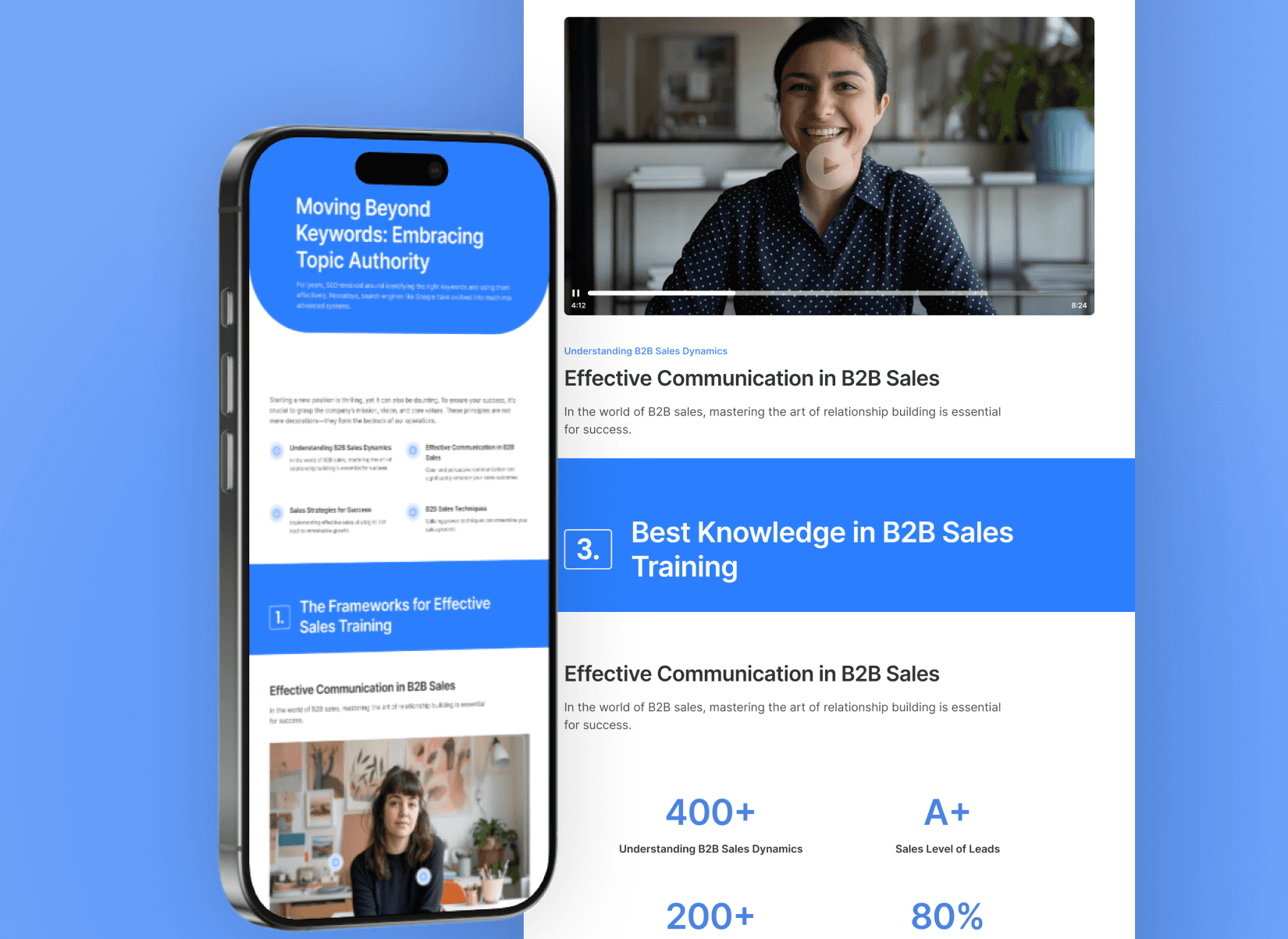
Train buyer knowledge through persona courses, industry case studies, competitor comparisons, customer stories, and scenario-based exercises.
Short microlearning lessons can be especially useful when reps need regular updates about new competitors, market developments, positioning, or buyer trends.
Example exercise: Give the rep three buyer profiles and ask them to identify the most relevant pain points, proof points, discovery questions, and likely objections for each one.
3. Prospecting
Prospecting training helps SDRs and other sellers start conversations with potential customers.
It can include cold calling, email outreach, social selling, account research, personalisation, value propositions, and handling early pushback.
Signs of a prospecting gap include low reply rates, weak call openings, overlong emails, generic personalisation, and difficulty explaining the reason for reaching out.
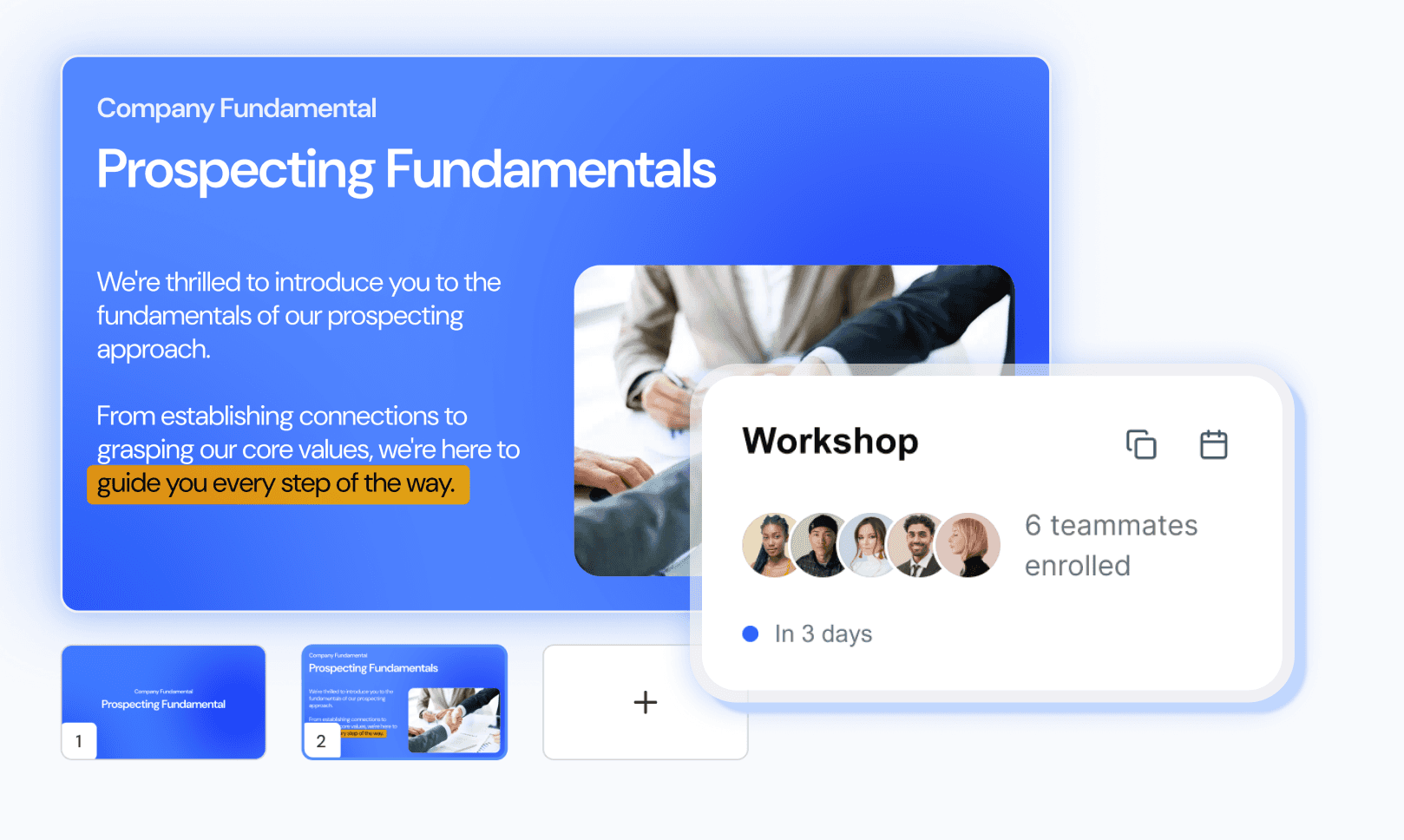
The best prospecting training combines clear examples with repeated practice. A course can explain the structure of a strong cold call, but reps also need to rehearse what happens when the prospect says:
“Can you send me an email?”
“We already use another provider.”
“I am about to join a meeting.”
“This is not a priority.”
Example exercise: Run a cold call roleplay where the rep has 30 seconds to earn the right to continue the conversation.
4. Discovery
Discovery is one of the most important sales training needs because it affects almost every stage that follows.
When discovery is weak, reps pitch too early, ask surface-level questions, and recommend solutions before understanding the buyer’s real situation.
A rep may collect basic information but still fail to uncover business impact, urgency, decision criteria, internal blockers, or stakeholder priorities.
Train discovery through question-building workshops, call reviews, manager coaching, and realistic roleplays where the buyer does not reveal everything immediately.
Example exercise: The buyer says, “Our reporting process takes too long.” The rep must uncover what causes the delay, who is affected, what it costs the company, and why solving it matters now.

5. Communication and message clarity
Strong sales communication is clear, concise, relevant, and easy to understand.
Reps often need training when they use too much jargon, over-explain simple ideas, deliver memorised pitches, or struggle to adjust their message to different audiences.
Message training can include value propositions, elevator pitches, storytelling, meeting openings, product explanations, and executive communication.
Recorded practice is particularly useful because reps can hear whether they sound clear and confident rather than relying only on how they felt during the conversation.
Example exercise: Ask the rep to explain the product’s value in under 60 seconds without using internal terminology or feature names.
6. Active listening
Active listening means paying attention to what the buyer says, recognising what remains unclear, and asking relevant follow-up questions.
A listening gap often appears when reps interrupt, repeat questions, miss emotional signals, or move to the pitch before fully understanding the answer.
Call recordings can help managers identify these moments. Roleplays can then give reps a safe environment to practise slowing down, leaving space, and exploring the buyer’s response.
Training can be scored around specific behaviours such as interruptions, talk-to-listen ratio, follow-up questions, empathy, and whether the rep accurately summarised the buyer’s situation.
Example exercise: The prospect gives an incomplete answer to a discovery question. The rep must ask three useful follow-up questions before mentioning the product.
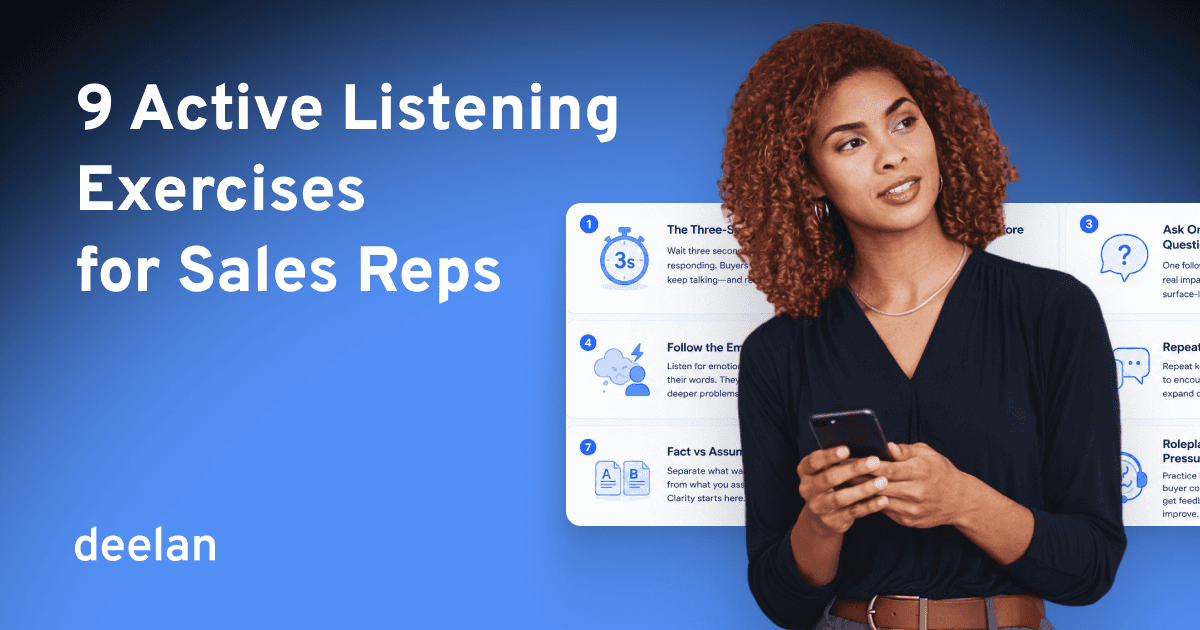
Read the article: https://deelan.ai/resources/active-listening-exercises
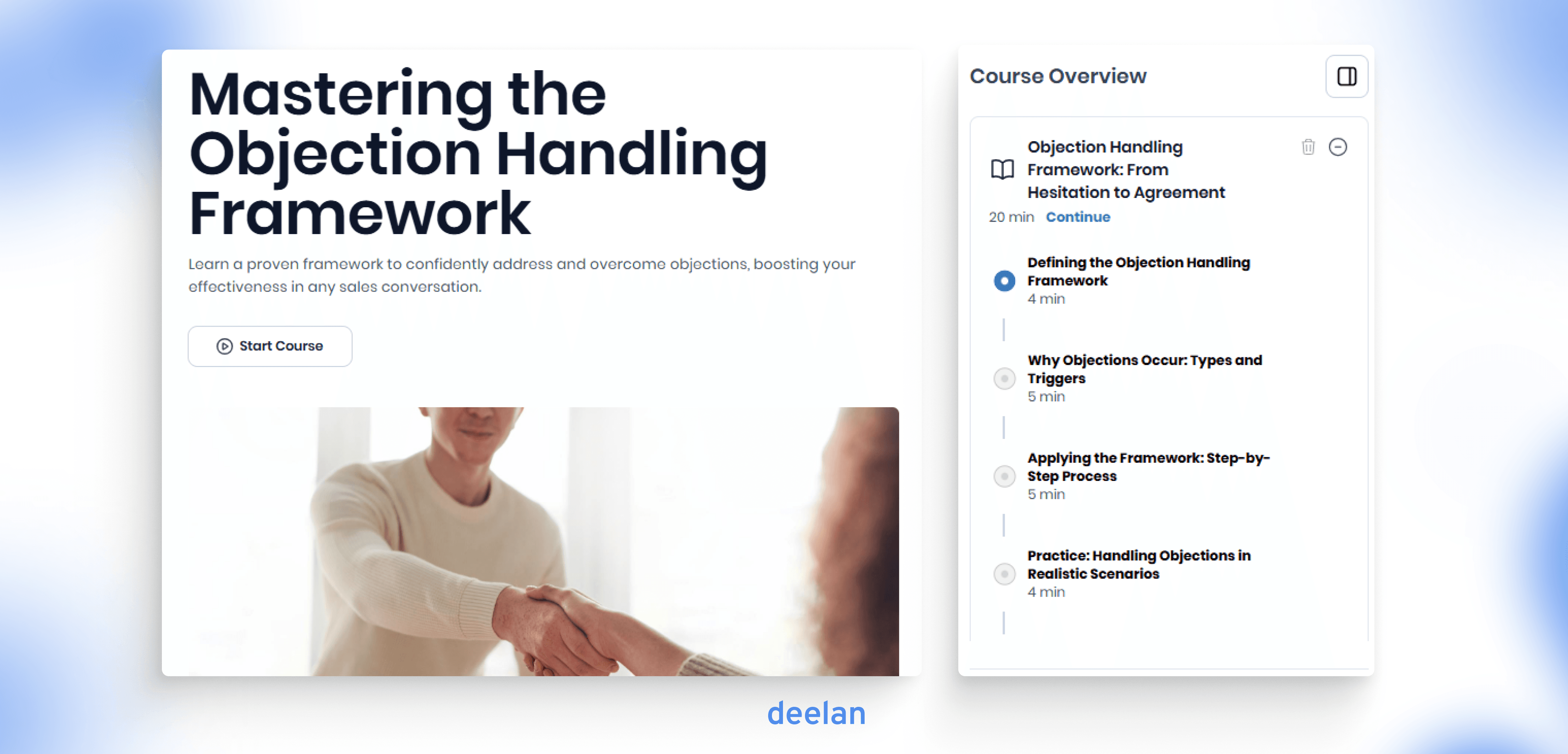
7. Objection handling
Objections are not solved by memorising one perfect response.
Reps need to recognise the type of objection, understand what is behind it, respond calmly, and decide whether to question, clarify, reframe, provide evidence, or move on.
Common gaps include becoming defensive, speaking too quickly, offering discounts too early, or delivering responses that sound scripted.
Use short courses or microlearning to introduce objection-handling frameworks. Then use roleplays for repeated practice with different buyer personalities and levels of resistance.
Example exercise: Practise the same pricing objection with three buyers: one genuinely lacks budget, one does not understand the value, and one is simply testing whether the rep will discount.
8. Product demos
A strong demo is not a complete tour of every product feature. It is a focused conversation showing how the solution connects to the buyer’s needs.
Demo training becomes necessary when reps show too much, fail to ask questions during the presentation, ignore buyer reactions, or use the same flow for every prospect.
Reps should practise setting an agenda, confirming priorities, selecting relevant features, explaining value, handling interruptions, and moving toward a next step.
With product demo simulations, reps can share their screen with an AI buyer that listens, asks questions, raises objections, and reacts as a real prospect would.
Example exercise: Give the rep a buyer profile and three priorities. The rep must run a 10-minute demo showing only the parts of the product that support those priorities.
9. Negotiation
Negotiation training helps reps protect value while working through pricing, contract terms, timelines, implementation expectations, and competing priorities.
A training need often appears when reps make concessions without receiving anything in return, respond emotionally to pressure, or treat every negotiation as a pricing discussion.
Reps should learn to prepare their positions, understand the buyer’s constraints, reinforce value, ask questions before responding, and trade rather than simply give.
Example exercise: The buyer requests a 20% discount and faster implementation. The rep must explore the reason, identify what matters most, and negotiate without accepting both requests immediately.
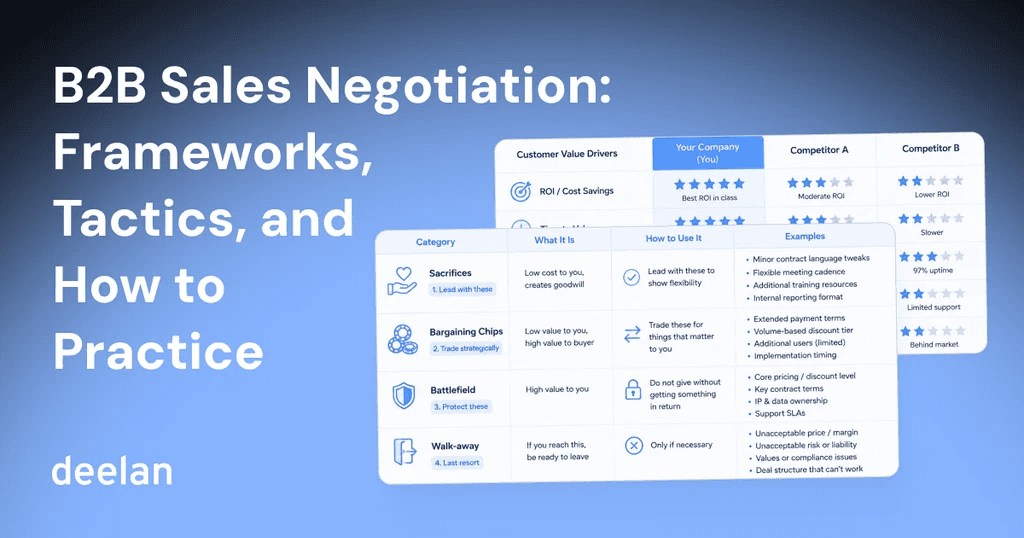
Read the article: https://deelan.ai/resources/b2b-sales-negotiation-a-practical-guide
10. Closing and agreeing on next steps
Many deals do not fail because of one dramatic mistake. They simply lose momentum.
Reps may finish a good call without agreeing on who will do what next, when the next meeting will happen, or which other stakeholders need to be involved.
Closing training should not focus only on asking for the final signature. It should also cover meeting commitments, mutual action plans, follow-up communication, decision processes, and maintaining momentum.
Example exercise: End a discovery call roleplay with a clear next step, date, participant list, and reason for the next meeting.
11. Pipeline and opportunity management
Pipeline management is a skill, not just an administrative task.
Reps need to understand which opportunities deserve attention, how to recognise risk, when to disqualify weak deals, and how to keep CRM information accurate.
Signs of a gap include stalled opportunities, unrealistic close dates, missing next steps, large pipelines with low conversion, and forecasts based more on optimism than evidence.
Training can use real pipeline examples, deal clinics, qualification checklists, and manager-led reviews.
Example exercise: Give the rep a pipeline containing ten opportunities. Ask them to prioritise the deals, identify missing information, flag risks, and decide what action should happen next.
12. Sales methodology and process
A sales methodology gives reps a consistent way to understand, qualify, and move opportunities forward.
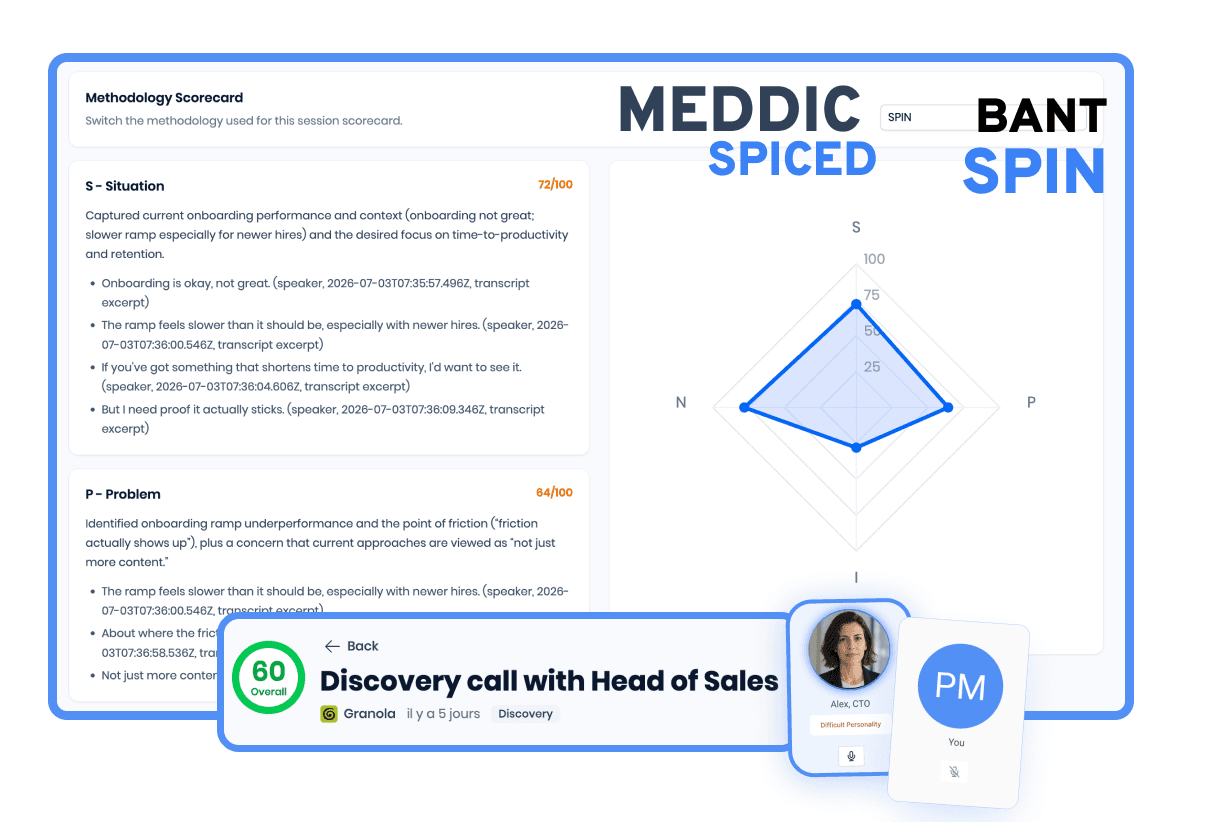
Depending on the sales motion, the team may use frameworks such as SPIN, MEDDIC, MEDDPICC, Challenger, Sandler, SPICED, or a custom internal process.
The training gap appears when reps know the framework’s vocabulary but do not apply it during real conversations.
Teach the methodology through a course, reinforce it through microlearning, test understanding through assessments, and use roleplays or call analysis to evaluate whether reps apply it correctly.
Example exercise: Give the rep a deal scenario and ask them to identify the missing qualification information according to the company’s chosen methodology.
Match the training format to the need
Different training needs require different formats.
Courses are useful for introducing product knowledge, processes, messaging, and methodologies.
Microlearning reinforces key ideas through short, regular lessons that are easier to complete and remember.
Assessments help identify existing knowledge gaps and confirm whether reps understand the material.
AI roleplays give reps repeated practice with discovery, objections, cold calls, negotiations, and product demos.
Programmes and learning paths combine several formats into a structured sequence for onboarding, upskilling, product launches, or role-specific development.
Call-based training connects learning to what actually happens in customer conversations.
A product launch programme, for example, could include a product course, a positioning assessment, short competitor microlearning, a messaging workshop, and roleplays with several buyer personas.
Address sales training needs with Deelan
Deelan helps revenue teams move from generic training to practical, personalised learning.
You can create training from your product documents, playbooks, call recordings, presentations, methodologies, or a simple prompt.
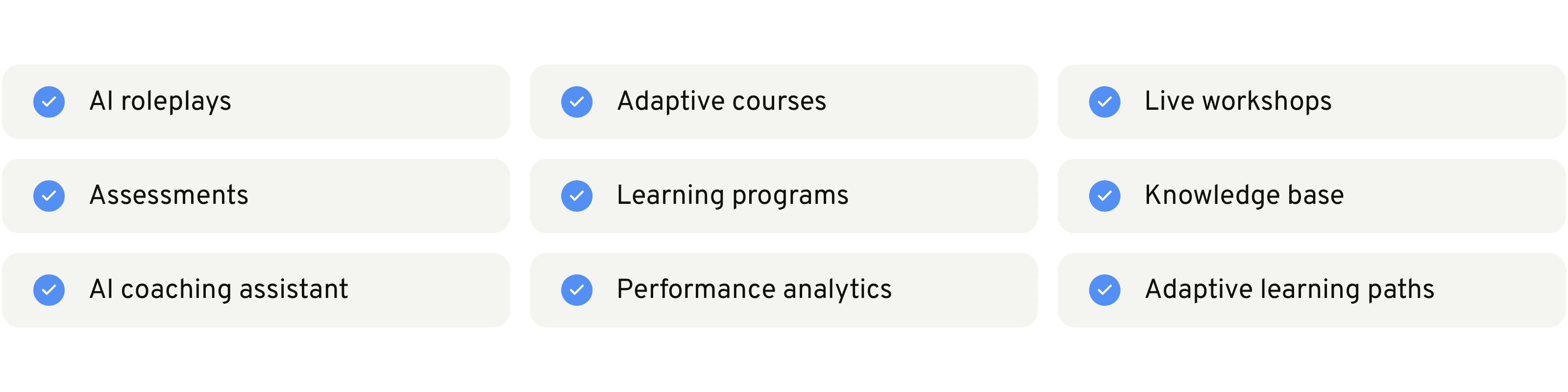
The platform supports:
AI-generated courses
Realistic AI roleplays
Product demo simulations with screen sharing
Microlearning
Assessments and quizzes
Workshops
Podcasts
Structured programmes and learning paths
Skills-based feedback
Personalised training recommendations
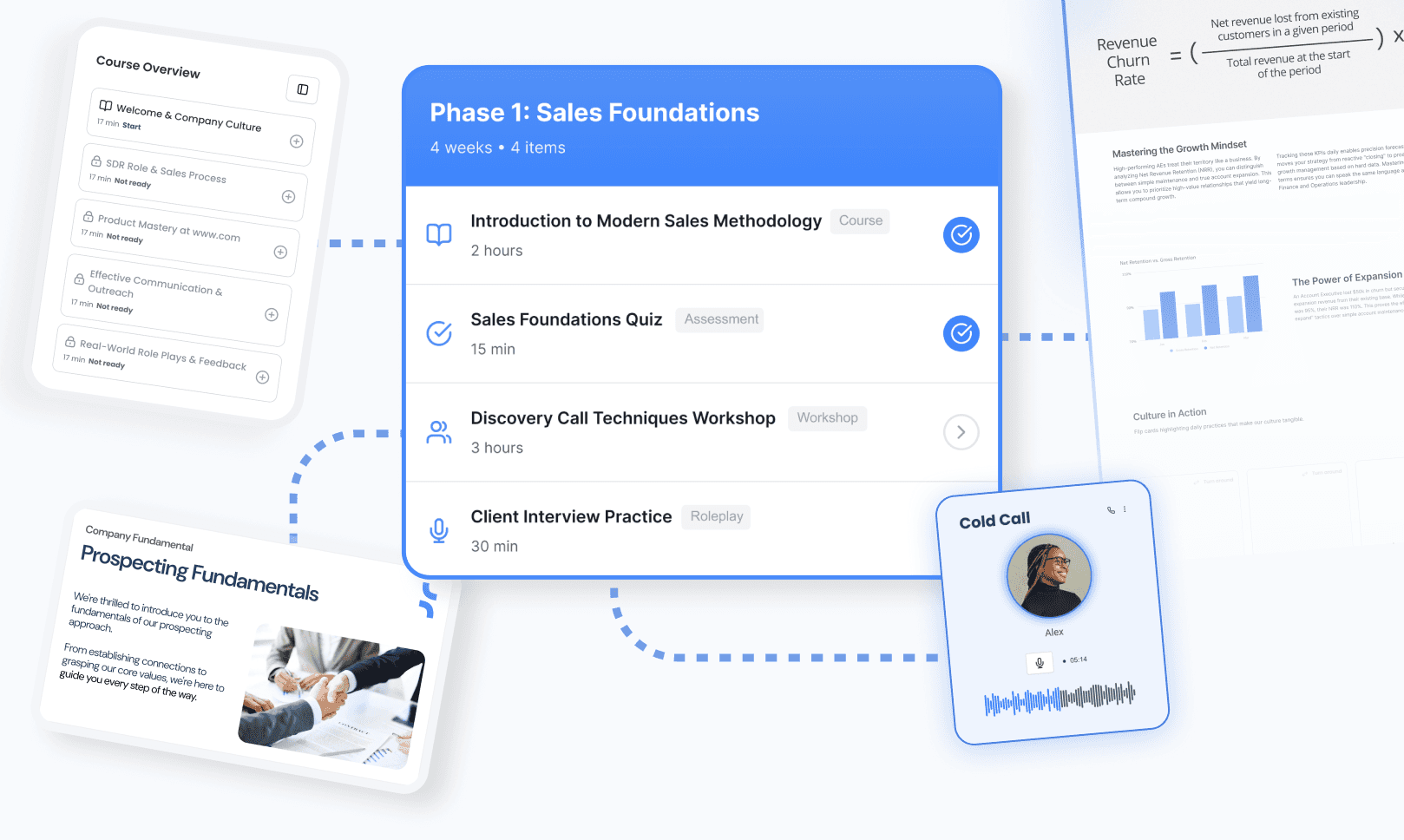
Instead of assigning the same material to every rep, teams can create training based on role, experience level, product, territory, methodology, or individual skill gap.
A rep struggling with discovery can receive a short course, a realistic discovery roleplay, and specific feedback. Another rep who needs help with pricing can practise negotiation and objection handling without repeating training they already understand.
That creates a continuous cycle:
Identify the gap → assign targeted training → practise → receive feedback → measure progress → train again
Sales training works best when it is not treated as a one-time event.
The objective is to create a system where every rep can learn the right skill, practise it in realistic situations, receive clear feedback, and improve over time.
Ready to address the real training needs of your sales team?
Generate courses, roleplays, microlearning, assessments, and complete training programmes with Deelan.