
New sales reps do not need three weeks of presentations before they can do anything useful.
They need:
enough product and customer knowledge to understand real conversations;
examples of what good selling looks like
opportunities to practice before speaking to valuable prospects alone.
This three-week sales onboarding training plan moves a new hire through ten practical steps.
By the end of the third week, the rep will not know everything or be at full quota. They should, however, understand the sales motion, use the main tools, communicate your value clearly, handle common situations, and begin controlled customer-facing work.
Want to build this onboarding plan faster?
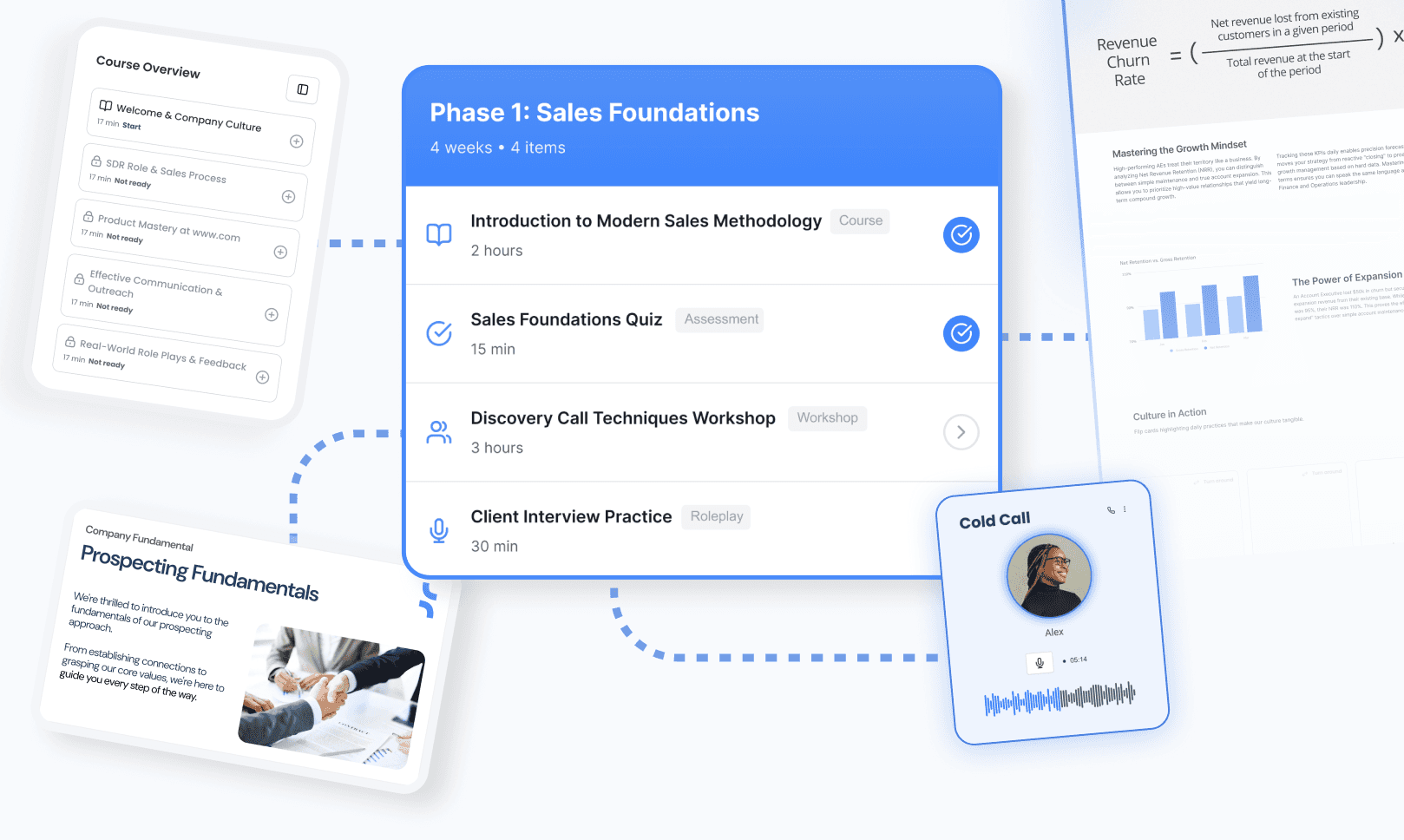
Turn your playbooks, product documents, call recordings, and sales materials into personalized courses, roleplays, assessments, and complete onboarding programs with Deelan.
What should sales onboarding cover?
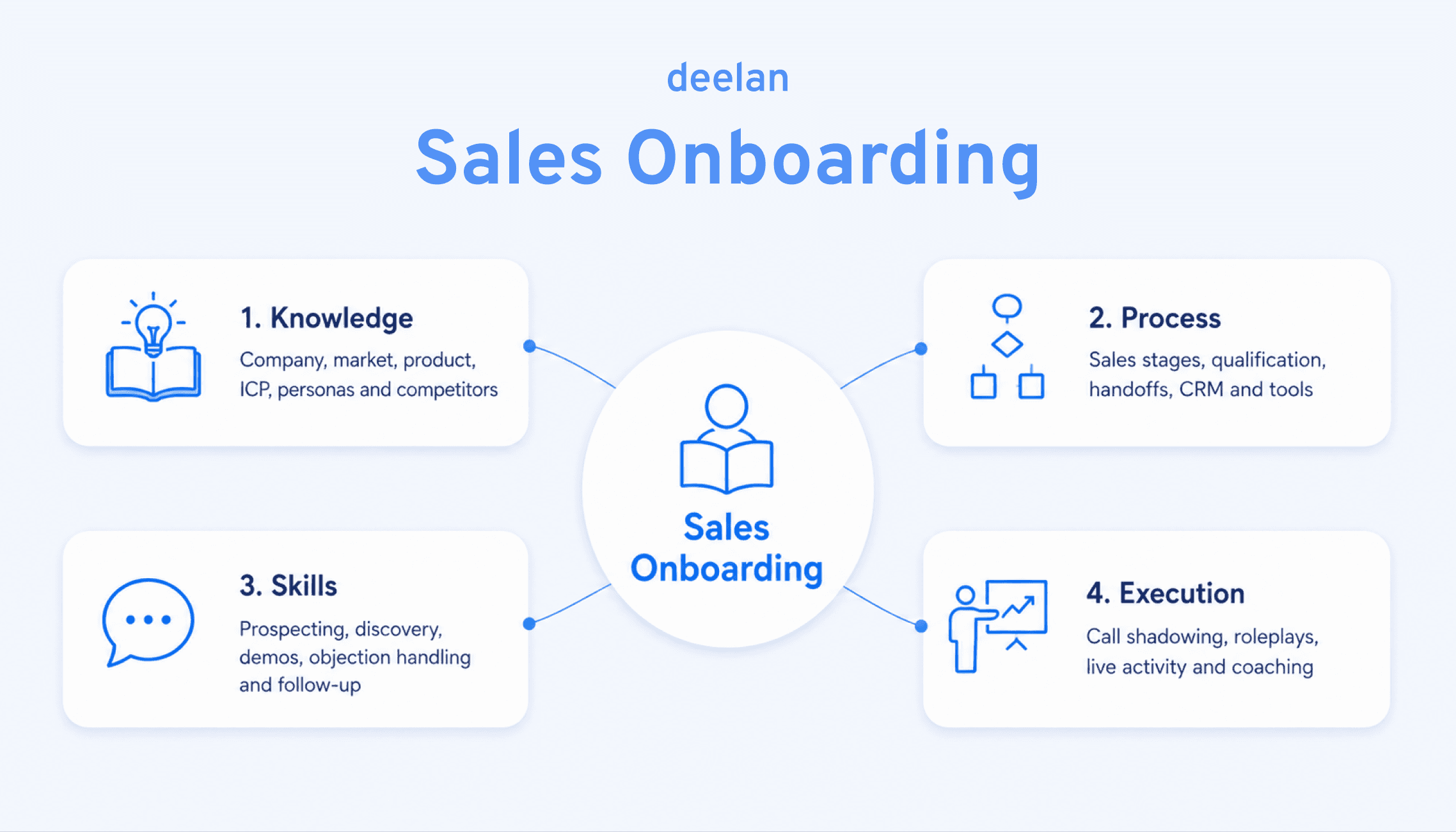
A complete sales onboarding plan should cover four areas:
Knowledge: Company, market, product, ICP, personas and competitors
Process: Sales stages, qualification, handoffs, CRM and tools
Skills: Prospecting, discovery, demos, objection handling and follow-up
Execution: Call shadowing, roleplays, live activity and coaching
The complete three-week sales onboarding training plan
Week | Main goal | What the rep learns | What the rep does | Readiness check |
|---|---|---|---|---|
Week 1 | Understand the company, customer and sales motion | Product basics, ICP, positioning, sales process and tools | Shadows calls, explores the product, practises the pitch and uses the CRM | Can explain the product, customer and sales process clearly |
Week 2 | Turn knowledge into practical sales skills | Discovery, qualification, objection handling, messaging and demos | Completes roleplays, reviews calls and starts controlled outreach | Passes product, messaging and core-skills assessments |
Week 3 | Begin customer-facing execution | Live-call preparation, follow-up, pipeline management and self-review | Runs selected calls or outreach with support and receives feedback | Demonstrates readiness for a defined level of independent work |
Before day one: prepare the onboarding experience
Sales onboarding checklist before the start date
Confirm the role, segment, territory and quota
Explain the compensation and ramp structure
Send the first-week schedule
Set up the laptop, email and calendar
Create CRM and sales-tool accounts
Provide access to call recordings
Prepare the demo environment
Add the rep to relevant internal channels
Assign an onboarding buddy
Schedule manager check-ins
Choose calls for shadowing
Create the first account or prospect list
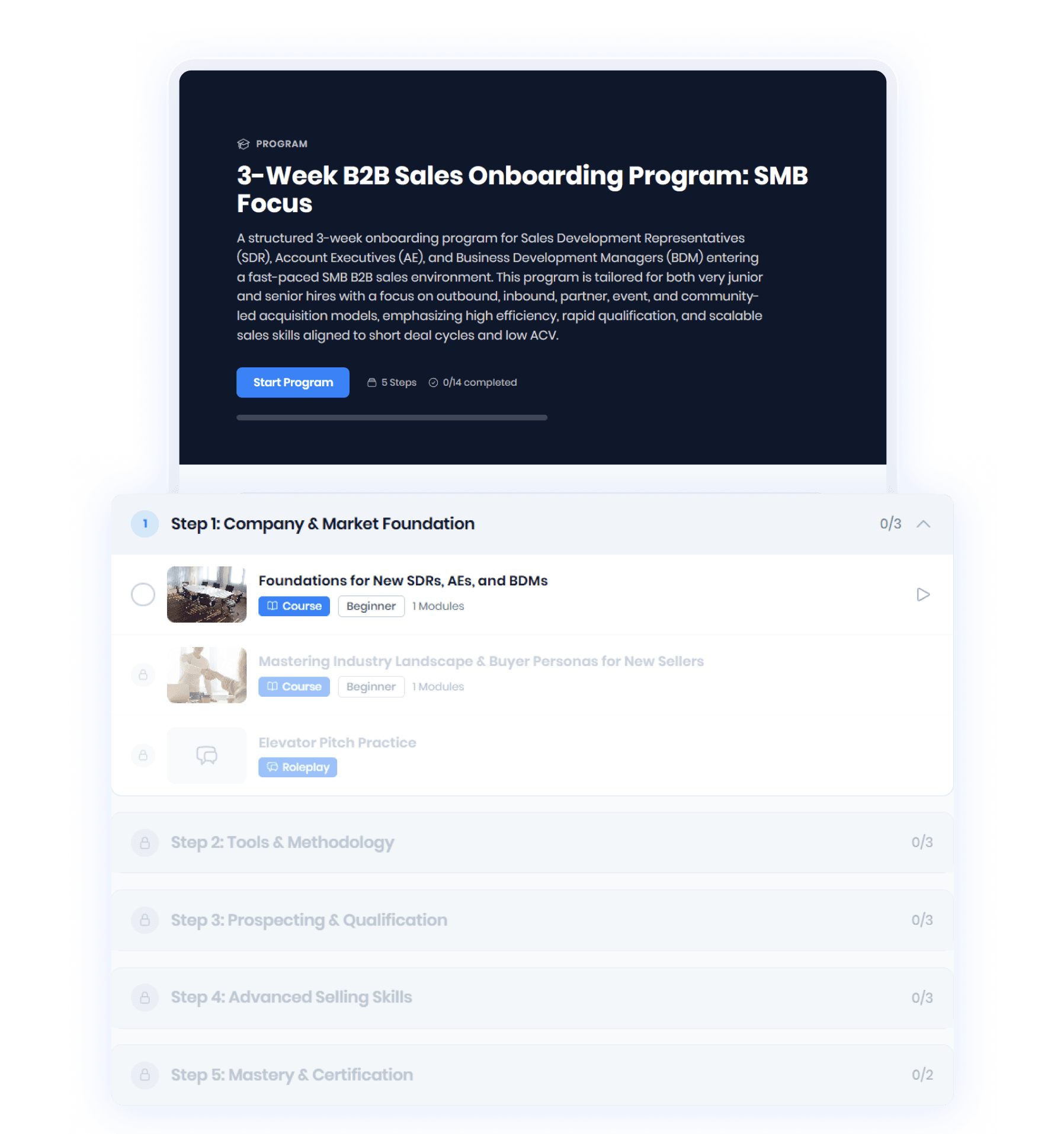
Share the onboarding program
Week 1: Build the foundation
The first week gives the rep the context needed to understand how your company sells. Do not try to cover every feature, objection and internal process. Focus on the information they will need during their first conversations.
Step 1: Set expectations on day one
Start by explaining what the rep was hired to do and how their progress will be evaluated.
Cover:
Their role in the revenue team
The customers and segment they will manage
Their main responsibilities
The sales cycle
Quota and ramp expectations
The three-week training structure
What happens after the initial three weeks
Who owns each part of their onboarding
Step 2: Teach the customer before the product
Begin with:
Your ideal customer profile
Main buyer personas
Common business problems
Buying triggers
Reasons customers look for a solution
Disqualification signals
Typical alternatives
Common concerns during the buying process
Give the rep several example companies and ask whether they fit the ICP. They should explain why each account is or is not a good fit.
Step 3: Connect the product to real use cases
Now introduce the product.
Avoid training the rep to repeat a list of features. Show how the product connects to the customer problems covered in the previous step.
For every important product area, explain:
The customer problem
The relevant feature or capability
The business outcome
A real customer example
A proof point
Possible limitations
Questions a buyer may ask
Ask the rep to explain the product in their own words. They should be able to give a simple 30-second explanation without reading from a script.
Step 4: Explain the sales process and tools
Walk through the complete sales process, even if the rep will initially own only one part of it.
Cover:
Prospecting or lead assignment
Qualification
Discovery
Demo or solution presentation
Evaluation
Commercial discussion
Negotiation
Close
Handoff to customer success
The rep should also practise the daily workflows they will use:
Finding an account
Adding a contact
Logging an activity
Writing call notes
Creating an opportunity
Moving a deal between stages
Scheduling a follow-up
Finding an approved sales asset
Do not separate tool training from real sales work. Let the rep use the CRM while completing realistic tasks.
Step 5: Start call shadowing during the first week
New hires should hear real buyers as early as possible.
Select recordings that show different parts of the sales process:
A strong first call
A difficult discovery call
A successful demo
A common objection
A competitive discussion
A call that did not go well
Week 1 readiness check
By the end of week one, the rep should be able to:
Explain the ICP and main personas
Describe the product in simple language
Connect core features to customer problems
Explain the sales stages
Complete basic CRM tasks
Review a sales call using a rubric
Deliver a short opening or pitch
Week 2: Build practical sales skills
During week two, the balance should move from learning to practice.
The rep now has enough context to begin working on the conversations they will have with real prospects.
Step 6: Train the most important call moments
Do not begin by practising an entire one-hour sales conversation.
Break the call into smaller moments:
Opening the conversation
Setting an agenda
Asking the first discovery question
Following up on a vague answer
Summarizing the customer’s problem
Explaining the value proposition
Responding to “send me some information”
Discussing a competitor
Agreeing on a clear next step
Short, focused practice makes feedback easier to understand and apply.
Step 7: Use roleplays before live customer conversations
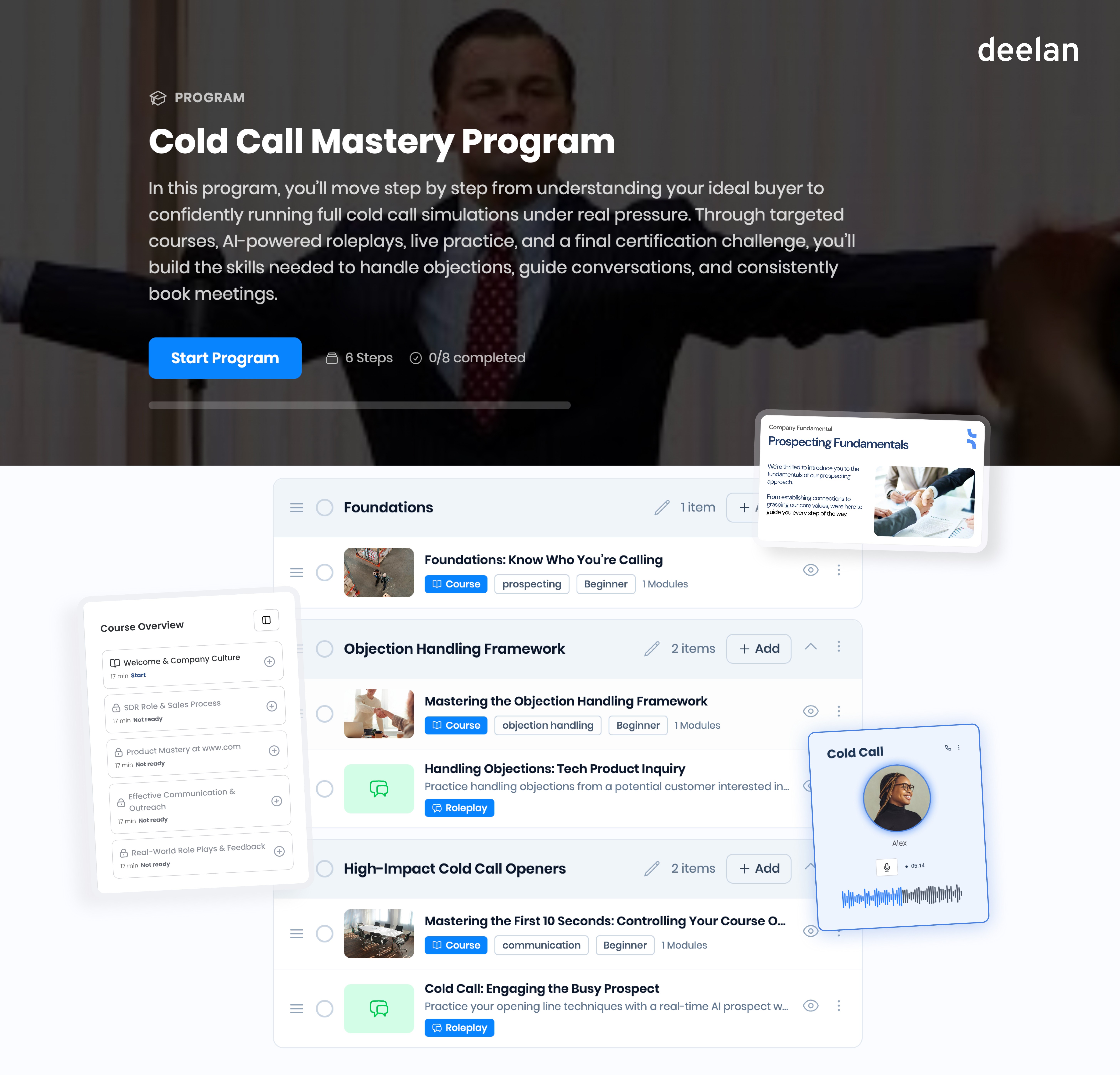
Roleplays let a rep make mistakes without risking a real opportunity.
Create realistic scenarios based on:
Actual buyer personas
Real sales calls
Common objections
Typical account situations
Competitors your team encounters
Different levels of buyer interest
The simulated buyer should not agree with everything. They should interrupt, give unclear answers, question the value, mention competitors and resist the next step.
Score each roleplay on a small number of criteria:
Skill | What good execution looks like |
Opening | Clear, relevant and confident |
Discovery | Asks useful questions and follows up |
Listening | Responds to what the buyer actually says |
Value explanation | Connects the product to the buyer’s situation |
Objection handling | Acknowledges the concern and moves forward |
Next step | Agrees on a specific action and timeframe |
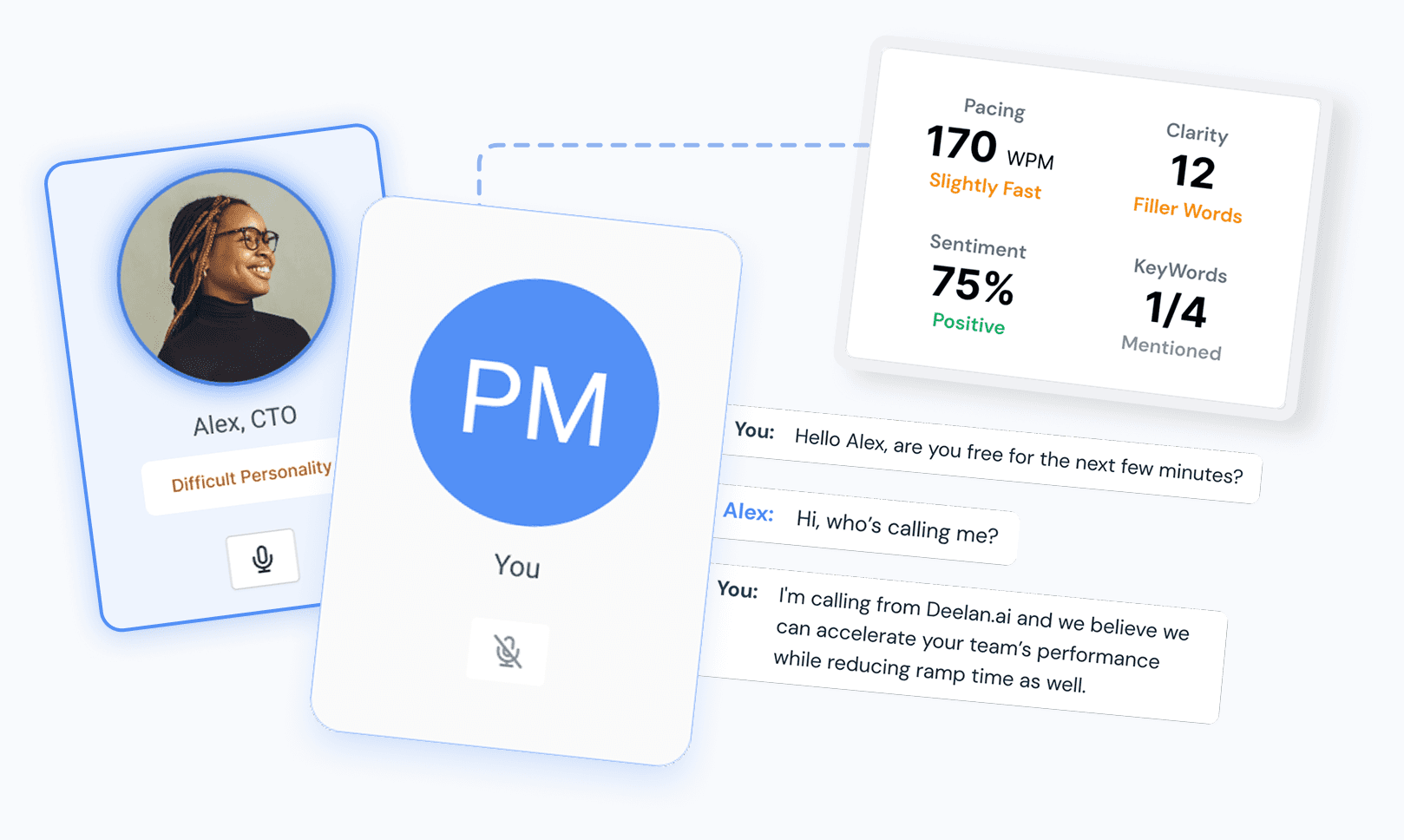
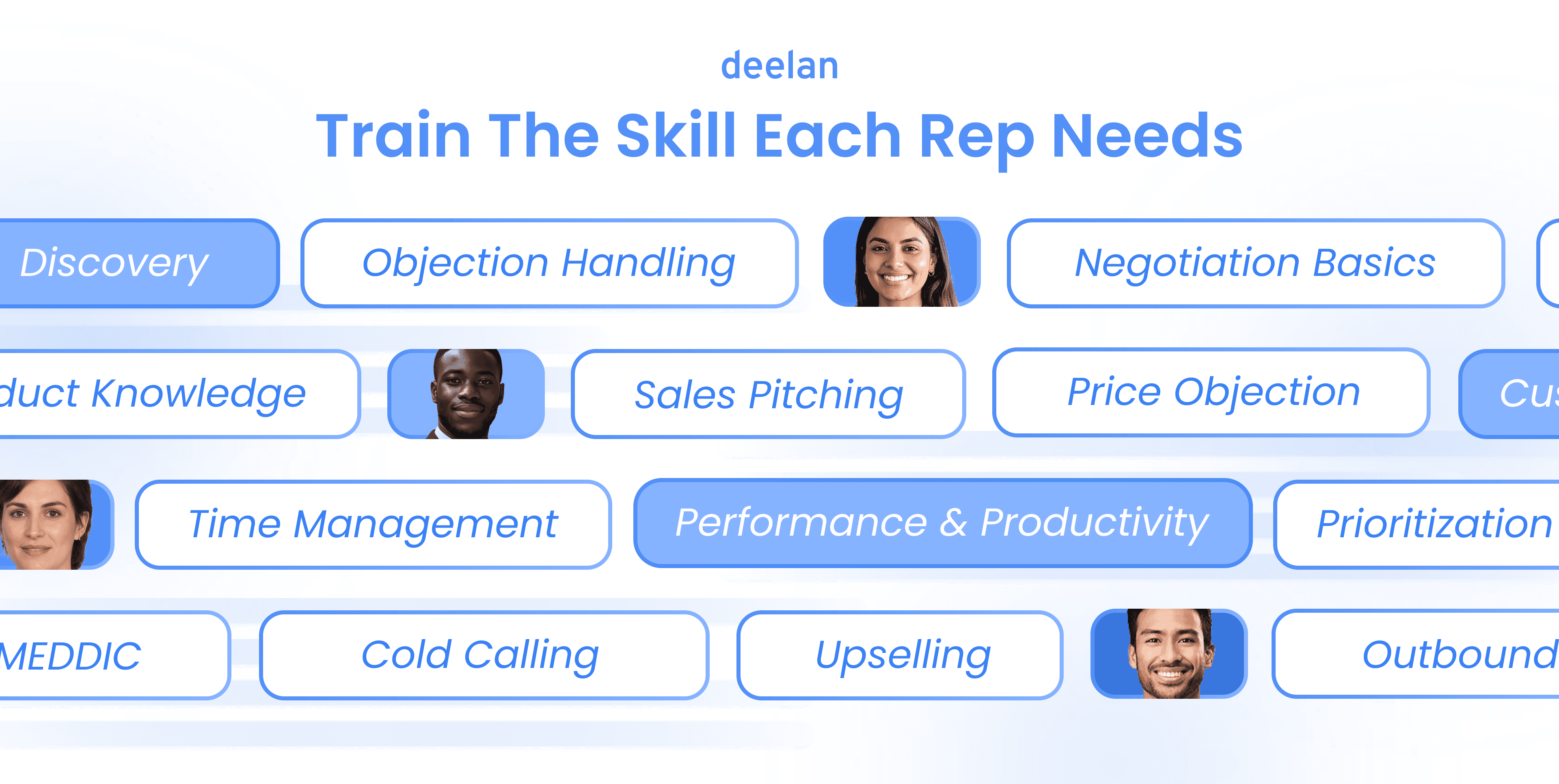
With Deelan, teams can turn company documents and call recordings into AI roleplays built around their own buyers, messaging and objections. Reps can practise independently while managers review skill scores and progress instead of personally running every simulation.

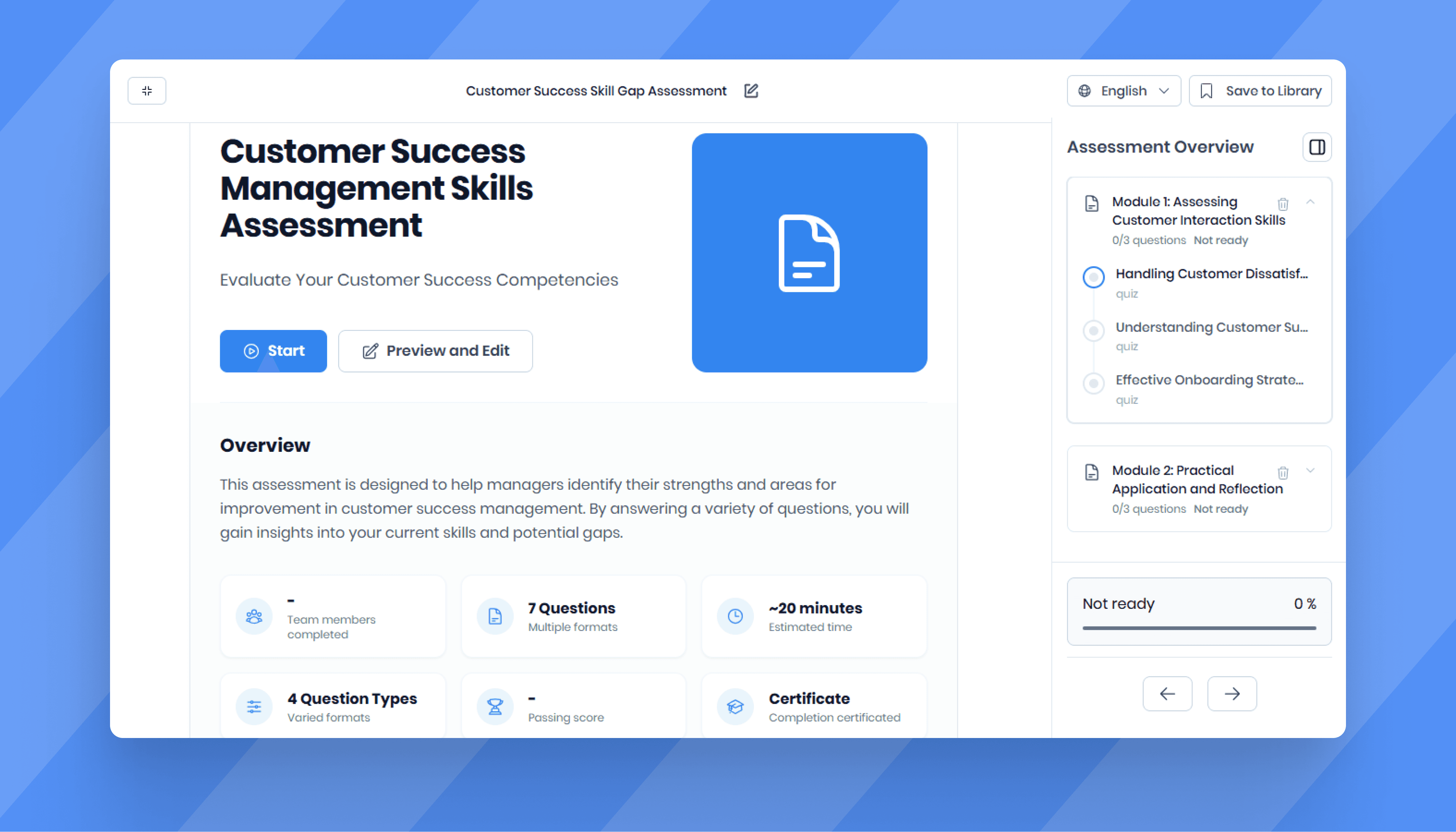
Step 8: Test knowledge and readiness
Use several forms of assessment:
A short product and ICP quiz
A written account qualification exercise
A messaging exercise
An objection-handling roleplay
A discovery simulation
A CRM task
A manager Q&A
Set the passing criteria before the assessment.
Week 3: Move into controlled execution
Week three introduces real selling, but not complete independence.
An SDR may begin making calls and sending personalized outreach. An AE may take part of a discovery call, run a smaller inbound meeting or deliver a section of a demo.
Step 9: Start live activity with support
Use a gradual progression:
Observe a real conversation
Prepare the call with a manager
Lead one part of the conversation
Run the conversation with the manager observing
Review the call immediately
Repeat with less support
Possible week-three activities include:
Building an ICP-based account list
Writing personalized outreach
Making first outbound calls
Running the opening of a discovery call
Leading part of a demo
Sending follow-up emails
Updating opportunities in the CRM
Preparing for an objection
Reviewing personal call recordings
Feedback should be fast and specific. Instead of saying, “You need better discovery,” identify one moment:
“You accepted the first answer without asking for an example. On your next call, use one follow-up question before moving on.”
Step 10: Create the post-onboarding development plan
At the end of week three, the manager should review:
Knowledge assessment results
Roleplay scores
Call-review scores
CRM proficiency
Early activity
Strengths
Main skill gaps
Support required
Next customer-facing responsibilities
Turn this into an individual plan for the next 30 to 90 days.
One rep may need more work on discovery. Another may understand discovery but struggle with pricing objections. A more experienced rep may need less basic sales training and more product or market depth.
They should not all receive the same next module simply because they started on the same day.
Manager tasks during the three-week plan
A strong plan still requires active manager involvement.
Week 1
Run the day-one expectations meeting
Check in briefly each day
Review at least one shadowed call
Listen to the rep’s product explanation
Confirm that all systems work
Week 2
Review assessment results
Give feedback on roleplays
Choose one priority skill
Run or review a realistic simulation
Decide which live activities the rep can begin
Week 3
Prepare the rep for early calls
Review recordings or live work
Give feedback quickly
Complete the readiness review
Create the next development plan
The manager should not have to repeat the same product explanation, objection exercise and CRM walkthrough for every new hire.
Deelan helps centralize this work.
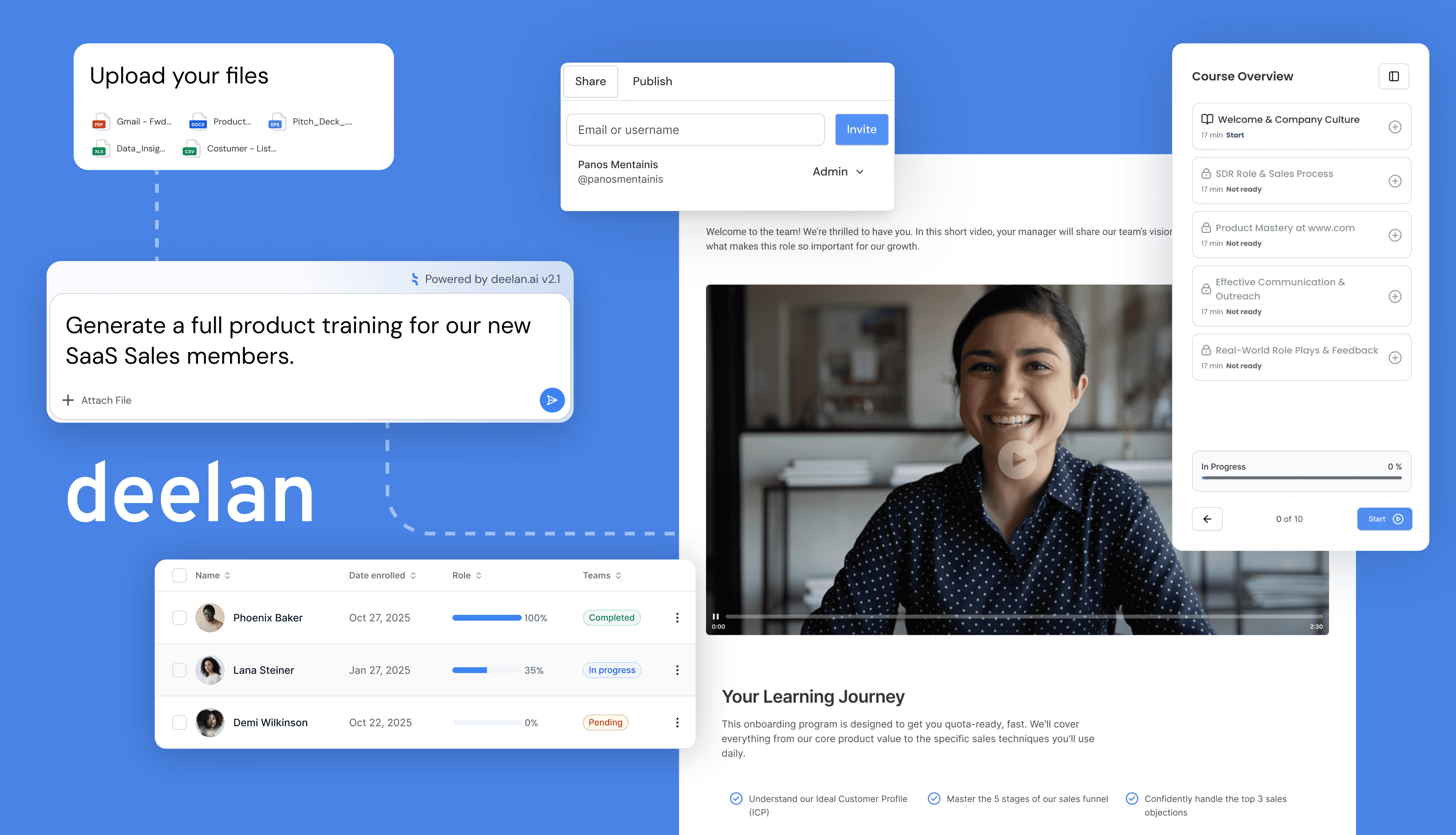
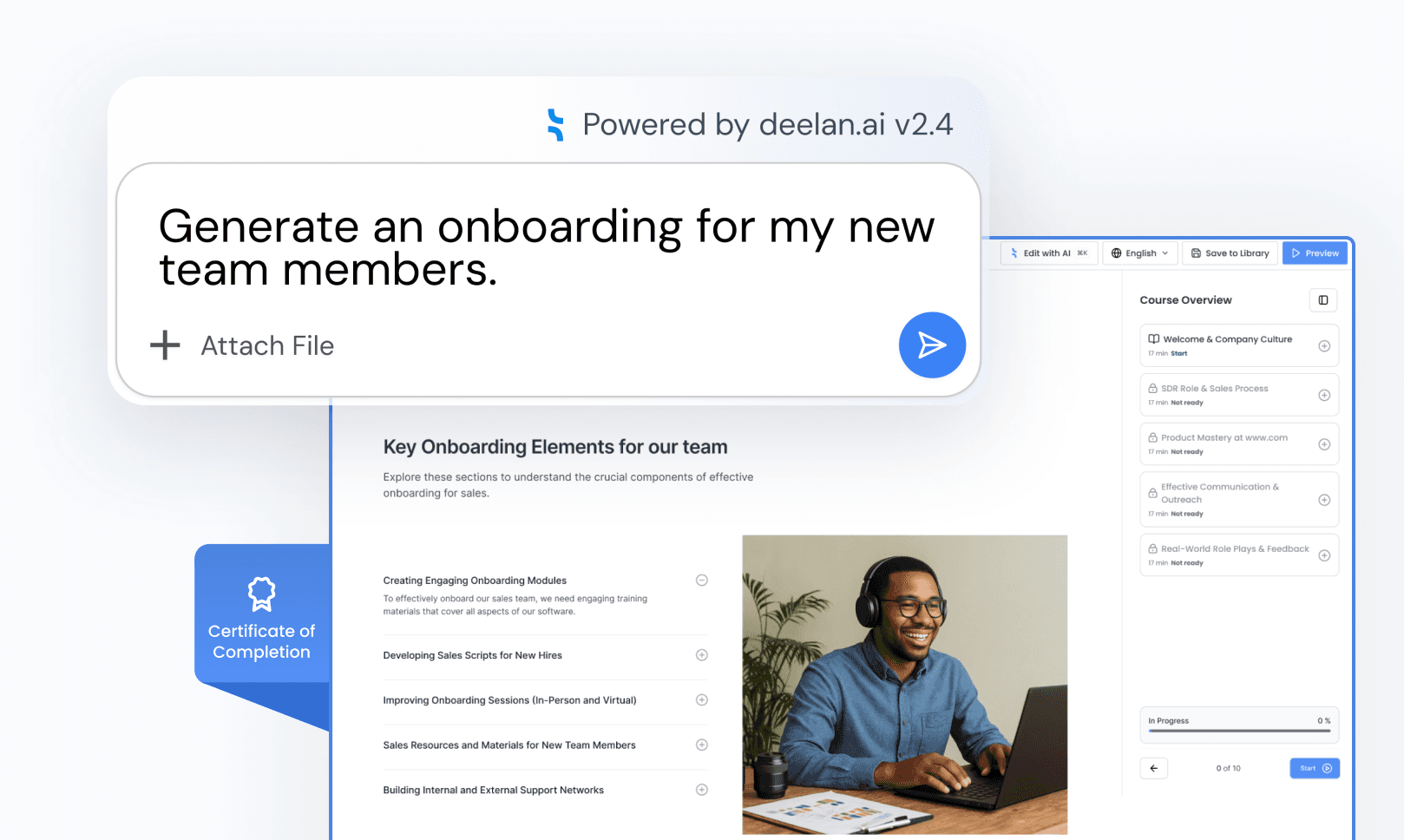
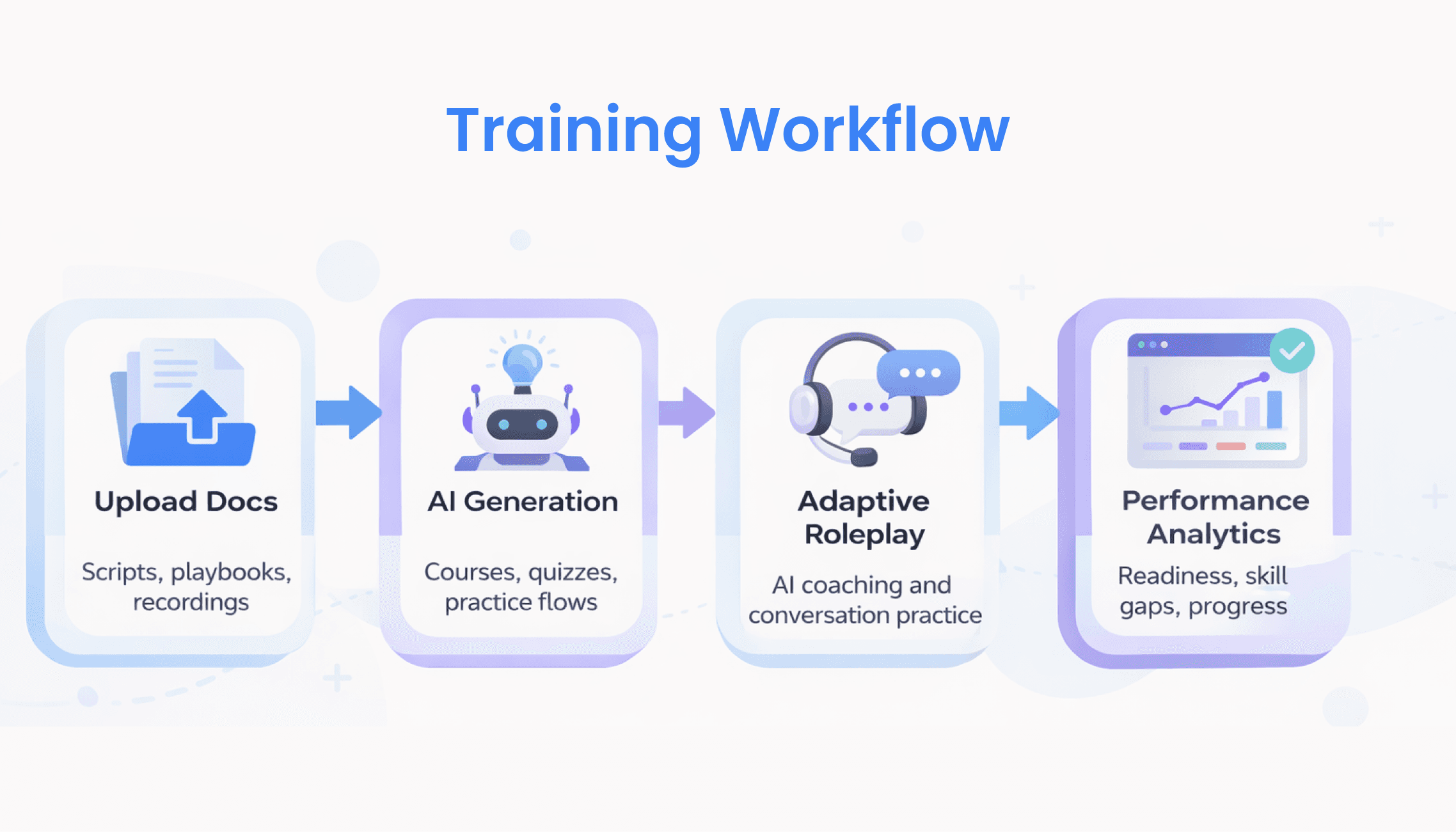
Teams can upload playbooks, call recordings, messages and product documents, then generate complete onboarding programs with courses, assessments, AI roleplays and structured learning paths.
Build your sales onboarding program in minutes
Create courses, roleplays, assessments and personalized paths using the materials your team already has.
Sales onboarding checklist
Use this checklist when preparing your next new hire.
Before day one
Role, segment, territory and quota confirmed
Three-week schedule shared
Laptop and tool access prepared
CRM account tested
Onboarding buddy assigned
Manager meetings scheduled
Training materials organized
Call recordings selected
Assessments and readiness standards created
Week 1
Company and team introduction completed
ICP and personas reviewed
Product use cases understood
Sales process explained
CRM workflows practised
First calls shadowed
First pitch or opening practised
Week-one readiness review completed
Week 2
Product and ICP assessment passed
Discovery questions practised
Common objections covered
At least three roleplays completed
Call-review exercise completed
Messaging exercise reviewed
Priority skill identified
Live-work readiness confirmed
Week 3
Real account or prospect work started
First customer-facing activity completed
Manager feedback delivered
CRM usage checked
Final roleplay or simulation passed
Skill gaps documented
Next 30-to-90-day plan agreed
The best three-week plan is simple:
Week one builds context
Week two builds practical skills
Week three introduces controlled execution
After that, training should become more personal.
Use real calls, current deals and performance data to identify what each rep needs next. Keep practising those skills until good execution becomes consistent.
That is how onboarding becomes the beginning of performance improvement rather than a collection of tasks every new hire must complete.