Sales enablement software has become one of the busiest categories in B2B.
There are platforms for content management, for onboarding, for coaching, for call intelligence, for learning management.
That makes sales enablement software selection harder than it should be.
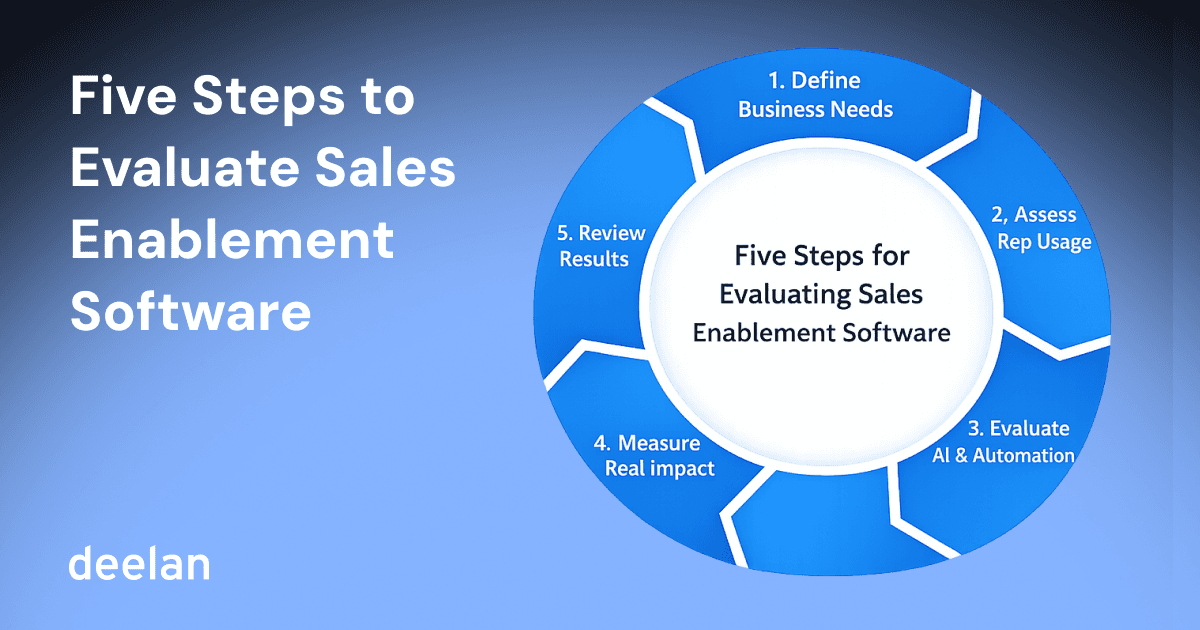
The five steps below will help you make that decision.
1. Define the Business Problem Before Comparing Platforms
Before you begin a sales enablement platform evaluation, step back and define what is actually broken.
Start with the business problem.
If new reps take six months to become productive, the issue may be slow ramp and weak onboarding.
Freebies
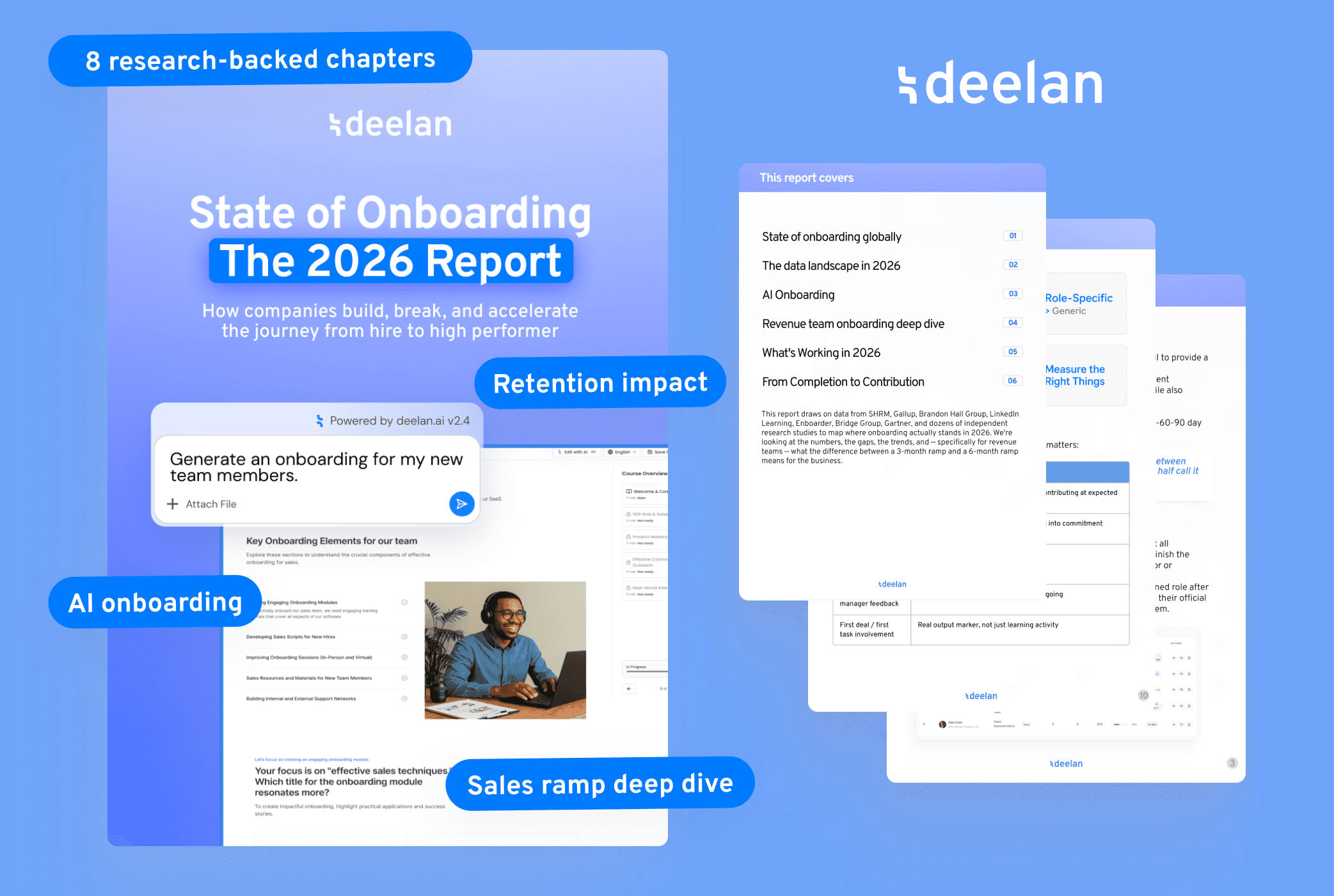
Get our Report about state of onboarding
This report breaks down exactly where the gaps are, what it's costing revenue teams, and what the fastest-ramping organizations are doing differently.
If managers spend hours repeating the same call feedback, the issue may be inconsistent coaching.
If your team already has content but nobody uses it, the issue may be content discovery and trust.
If reps struggle to explain the product or handle objections, the issue may be low confidence and lack of practice.
If knowledge lives across Google Docs, Slack threads, call recordings, and individual managers, the issue may be scattered information.
Different problems require different strengths.
A team with slow onboarding may need adaptive learning paths, role-based training, and progress tracking.
A team with weak coaching may need roleplay, AI feedback, and call-based assessments.
A team with low content usage may need faster search, contextual recommendations, and content inside the tools reps already use.
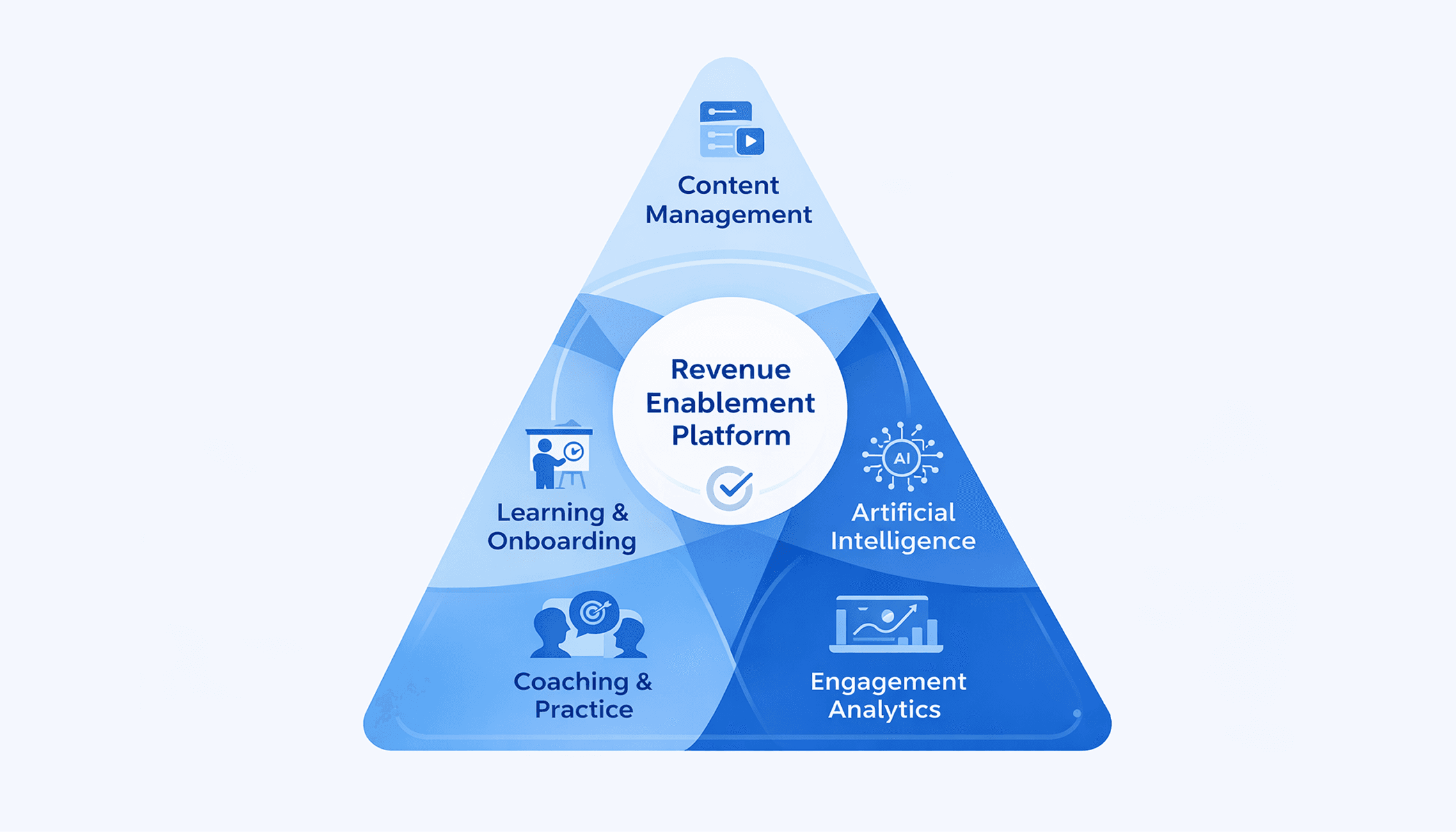
This is also where the five pillars of sales enablement become useful. Not every platform needs to cover every pillar. It needs to support the ones tied to your problem.
Strategy
The platform should support the way your team sells. That means clear buyer stages, messaging, personas, and goals. If your sales process is different for SMB, mid-market, and enterprise, the platform should reflect that.
Sales Content
Content should be current, relevant, and easy to access. Reps need different material at different stages. A discovery call needs messaging and objection handling. A late-stage deal needs proof, pricing, and case studies.
Sales Enablement Technology
Technology should reduce friction, not create another place to log in. CRM integrations, AI recommendations, automation, and search all matter.
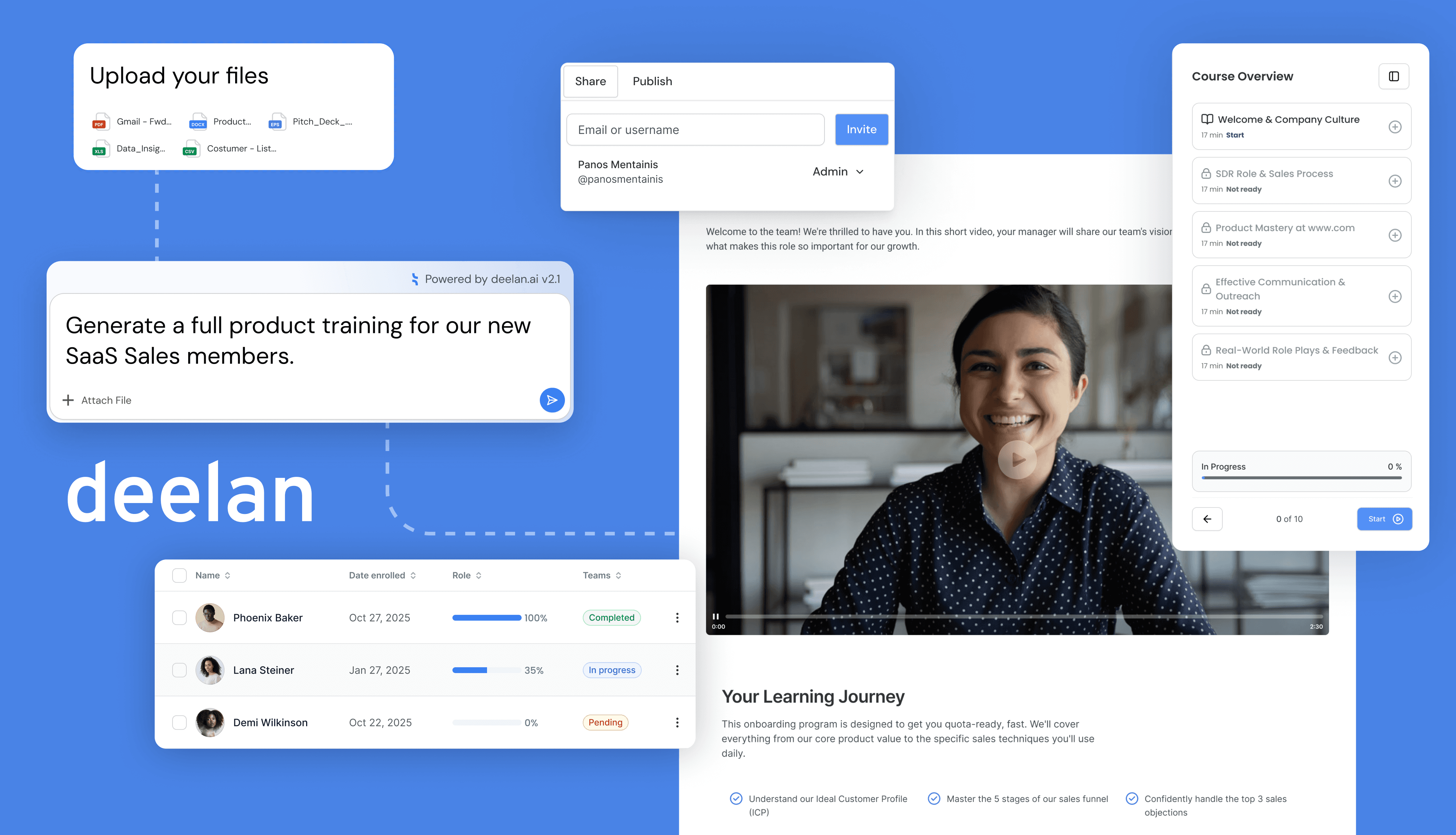
Training
Sales training should not stop after onboarding. Reps need repetition, coaching, and practice. The best platforms help teams revisit and apply what they learned.
Tracking
If you cannot measure what changed, the platform becomes another expense. You should be able to connect training and content usage to business outcomes.
2. Check Whether Reps Will Actually Use It
This is the most important part of how to evaluate sales enablement software.
Most sales teams ignore the content because it takes too long to find, feels outdated, or appears at the wrong moment.
The fewer clicks, the better.
The next question is whether the content is sticky.
Sticky content is content people remember and reuse. It is short enough to revisit, practical enough to apply, and tied to a real selling moment.
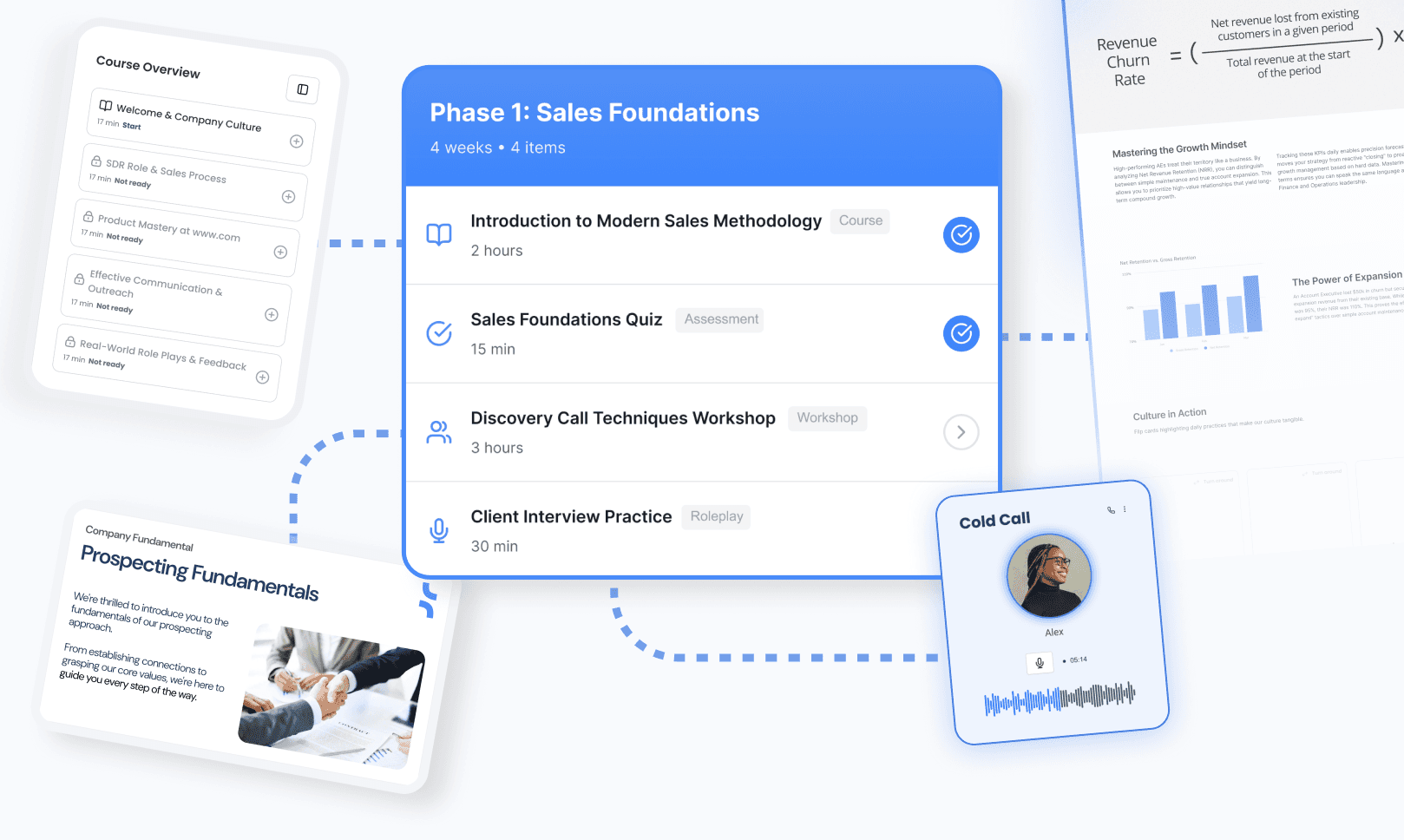
A 90-page sales playbook usually becomes shelfware. A short roleplay before a call, a micro-lesson after a lost deal, or a quick refresher before a product launch is more likely to be used.
Good sales enablement software supports reinforcement.
That can include:
practice after training
reminders based on previous mistakes
coaching suggestions after a real customer interaction
If managers still need to repeat the same feedback manually, the platform is not scaling enablement well.
3. Evaluate AI and Automation
Almost every vendor claims to use AI.
The question is whether the AI saves time and improves performance, or simply creates more content that nobody reads.
A useful platform should reduce the amount of manual work required from enablement teams and managers.
For example, can it take existing material such as call recordings, scripts, product documents, pitch decks, or internal notes and turn them into usable training?
Can it generate multiple formats from one source?
One product launch should not require a webinar, a slide deck, a quiz, a roleplay, and a knowledge base article all built manually.
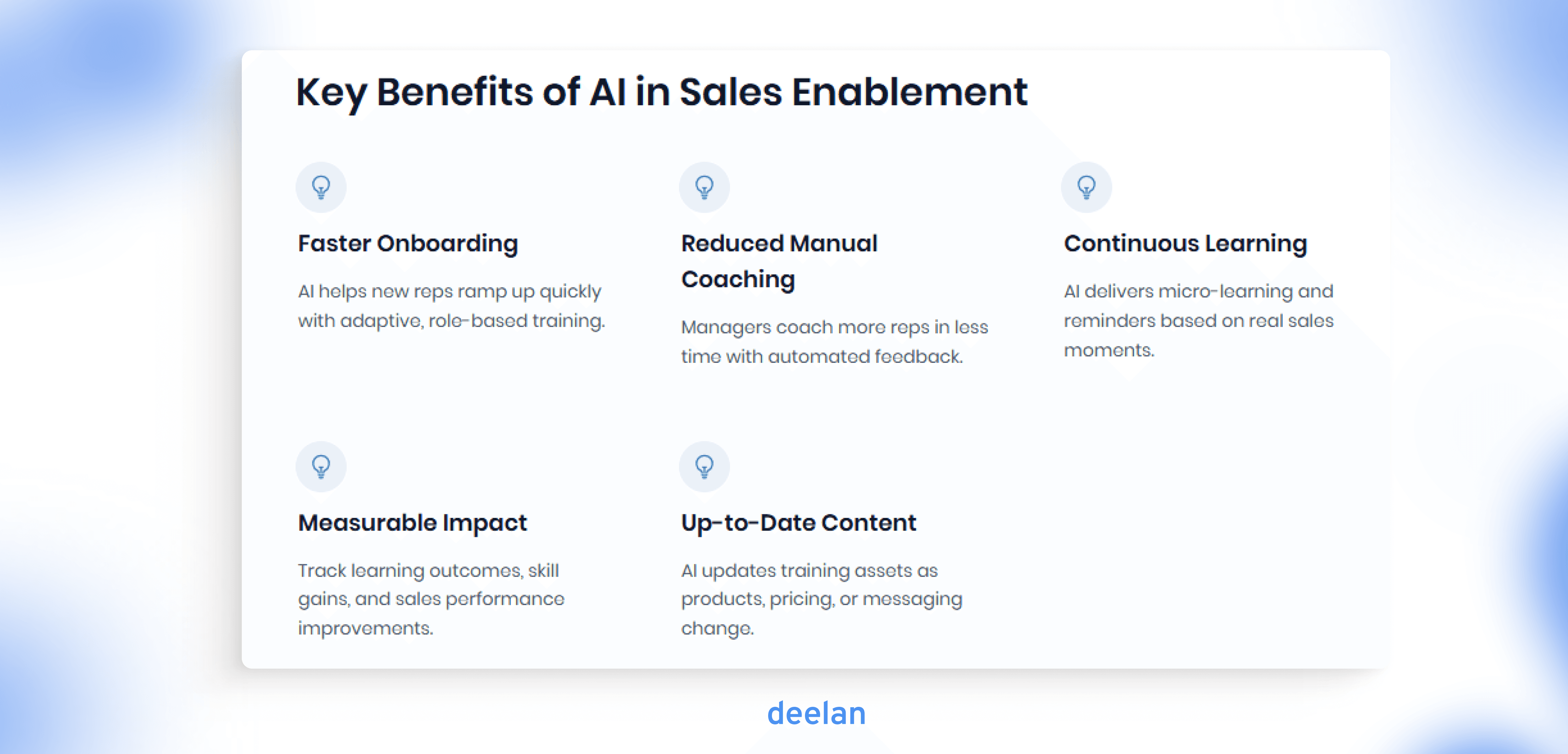
4. Measure Real Impact
Course completions, logins, and content uploads are easy to track. They are also easy to misread.
You want to know:
how long it takes a new rep to become productive
whether win rates improve
whether reps handle objections better
whether managers spend less time repeating the same coaching
whether content is used more often
whether pipeline quality improves
whether the platform saves time
When evaluating sales enablement software, connect platform activity to business outcomes.
If your current challenge is slow onboarding, track time to first meeting booked, time to first opportunity, and time to quota.
If your challenge is inconsistent execution, track call quality, deal progression, and manager coaching coverage.
If your challenge is low content usage, measure how often reps actually open, revisit, and use the material in deals.
Some teams also look at softer signals.
Do reps sound more confident?
Are fewer deals getting stuck for the same reason?
Do managers trust the platform enough to use it during pipeline reviews?
Those signs often appear before the revenue numbers do.
5. Test How Fast the Platform Stays Relevant
Most sales enablement content becomes outdated faster than teams expect.
Messaging changes. Pricing changes. Competitors change. Product teams launch new features. Managers update call scripts.
If the platform takes weeks to update, reps stop trusting it.
During your sales enablement software selection process, test how quickly the system can adapt.
Take one existing asset, such as a product update or a new objection, and see how long it takes to turn it into usable enablement.
Can those pieces update automatically when the original source changes?
This matters because enablement works best when it becomes continuous.
The strongest platforms no longer treat onboarding, training, coaching, and reinforcement as separate projects. They connect them.
Sales Enablement Software Checklist
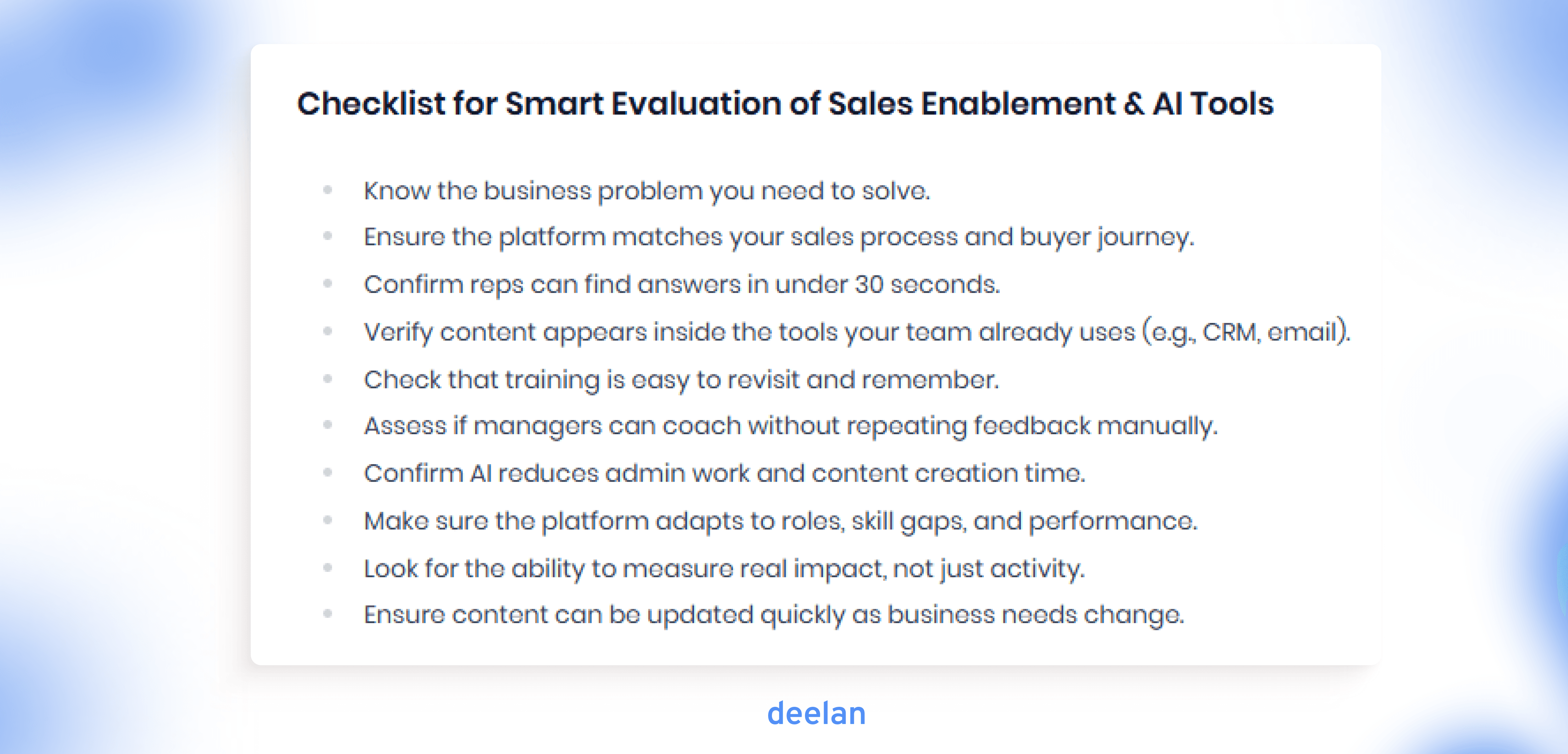
Before making a final decision, use this checklist:
We know the business problem we are trying to solve.
The platform matches our sales process and buyer journey.
Reps can find answers in less than 30 seconds.
Content appears inside the tools reps already use.
The training is easy to revisit, apply, and remember.
Managers can coach without repeating the same feedback manually.
AI reduces admin work and content creation time.
The platform adapts by role, skill gap, or performance.
We can measure impact beyond course completion.
The content can be updated quickly when the business changes.
As you narrow your shortlist, look closely at platforms that combine AI-generated training, adaptive learning, roleplay, and measurable coaching impact in one workflow.
If you are comparing options, it may be worth including a platform such as Deelan in your evaluation. Especially if your team needs faster ramp time, less manual coaching, and a more practical way to turn existing knowledge into training.
FAQ Section
What is the best way to start evaluating sales enablement software?
Start with the business problem. Identify whether your biggest issue is slow onboarding, low content usage, weak coaching, or poor messaging consistency. Then evaluate platforms against that problem.
How do I know if reps will use a sales enablement platform?
Test whether reps can find the right content quickly and use it inside their normal workflow. Platforms that require too many clicks or separate logins usually struggle with adoption.
What makes an AI sales enablement platform useful?
Useful AI should save time. It should generate training from existing knowledge, personalize learning by role or skill gap, and help managers coach without more manual work.
What metrics should I track after selecting sales enablement software?
Track ramp time, win rate, content usage, call quality, coaching coverage, time saved, and how quickly new reps become productive.